

How To Boil Eggs
 by Sommer Collier — last updated on Jun 25, 2026
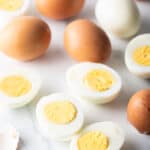
 Peeling hard-boiled eggs should not feel like a kitchen battle. That’s why I use this hard boiled eggs method whenever I want firm, silky yolks and shells that slip off easily. It’s a simple step-by-step recipe that works beautifully for meal prep, salads, and deviled eggs.
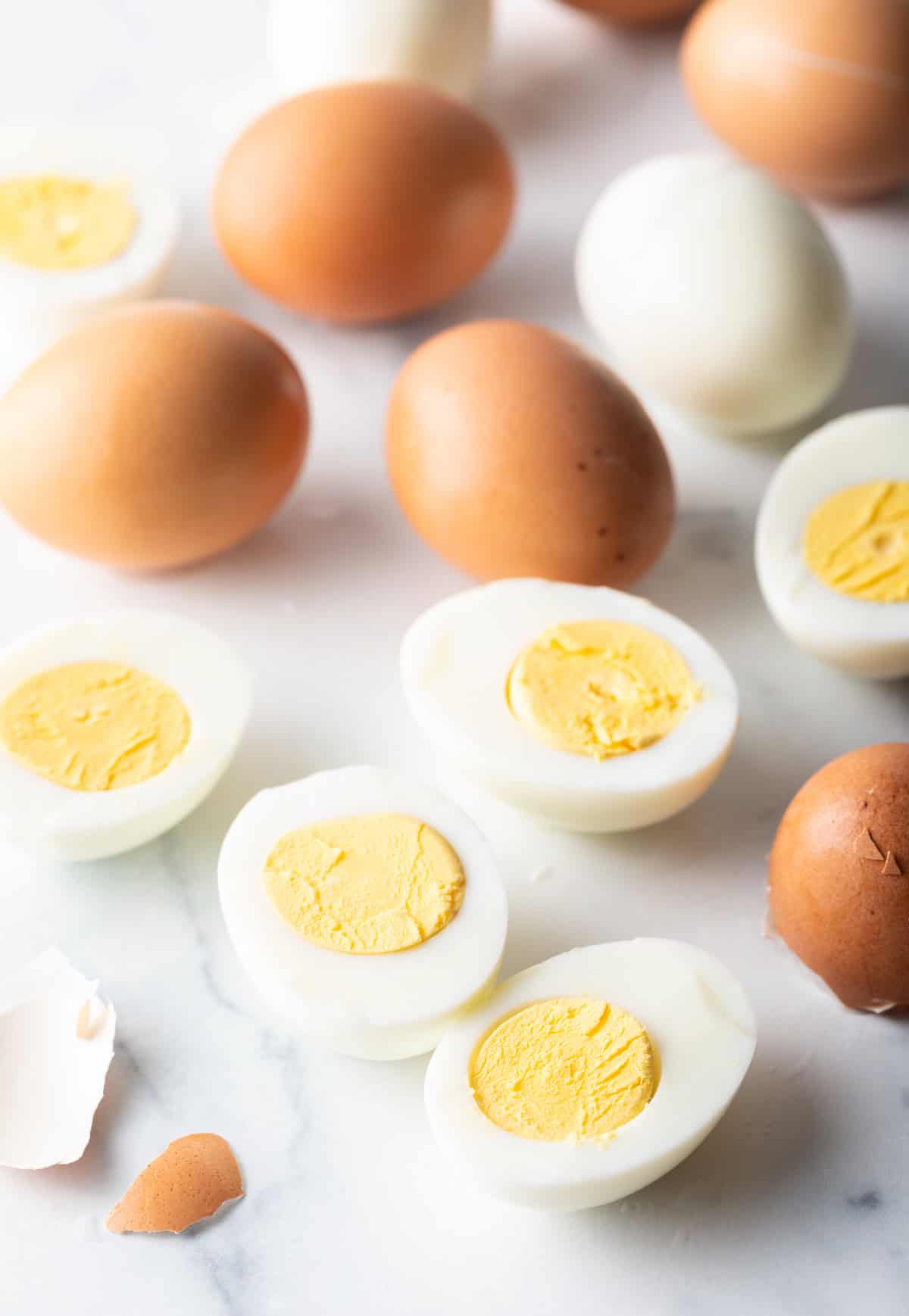
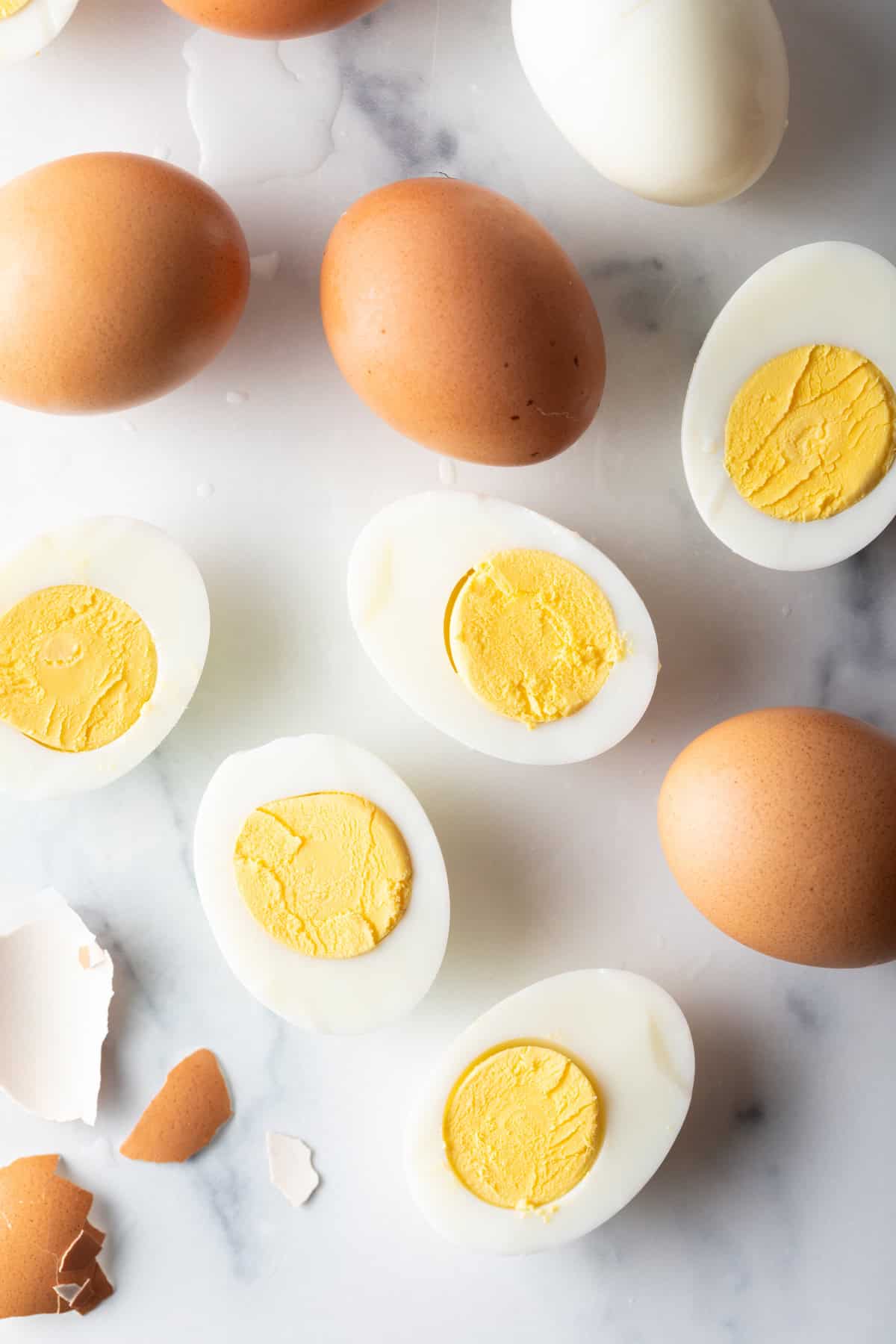
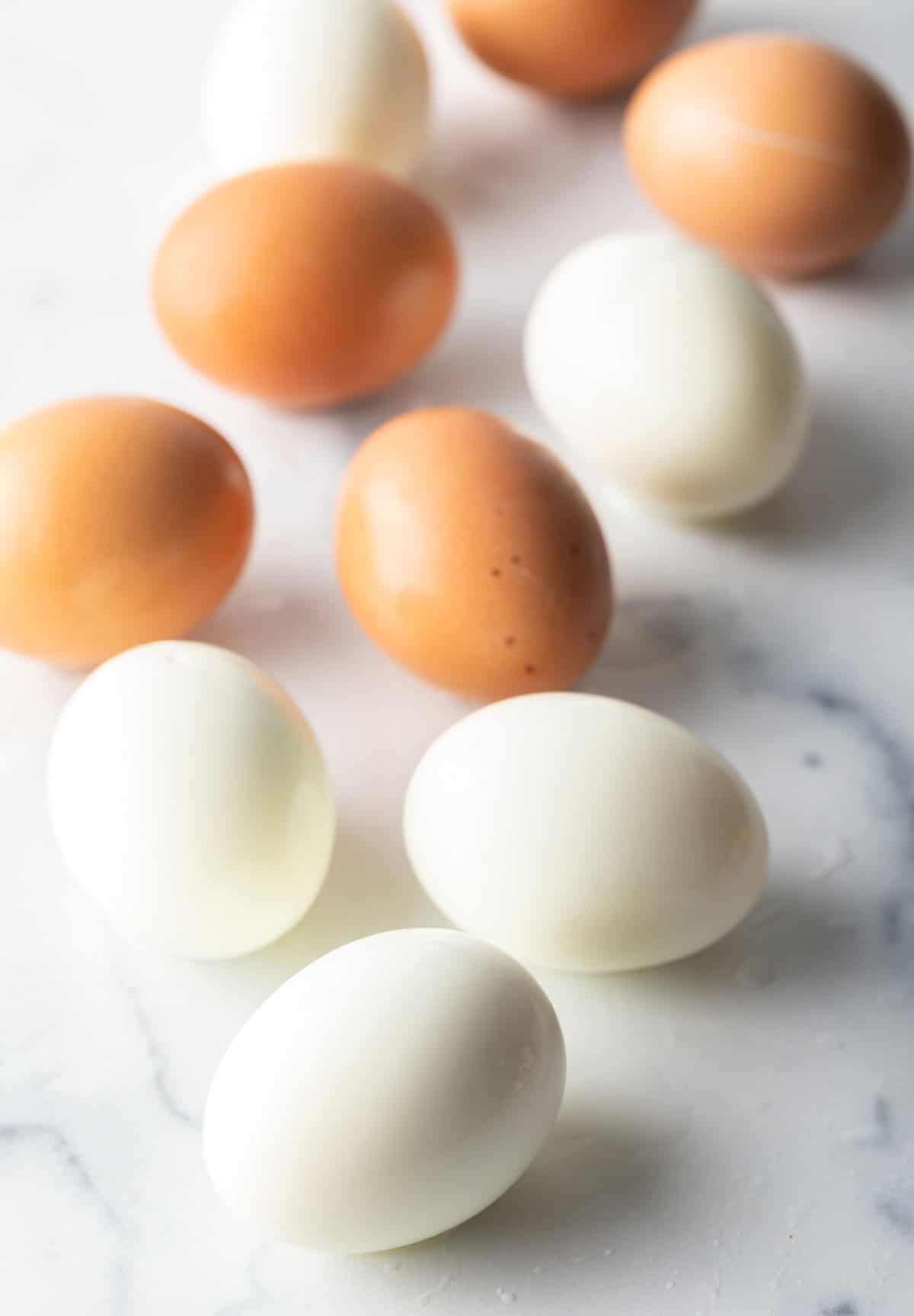
Classic hard boiled eggs are one of those must-have recipes for all home chefs, regardless of skill level or how often you cook. After literally years of testing and tweaking methods, I’m thrilled to share with you my go-to way to make perfect hard boiled eggs that are actually easy to peel! I will walk you through the entire foolproof process of hard-boiling eggs, including my best tips to know before getting started, and my top tricks for peeling the perfect egg. With these easy steps, you’re practically guaranteed to boil eggs with a firm and tender yellow yolk… No green rings here!
These versatile hard-boiled eggs are delicious to use in salads, grab as a healthy snack or breakfast on the go, and include in all kinds of savory dishes. Although I love all sorts of egg dishes, like my Huevos Rancheros recipe, I like the convenience of having boiled eggs on hand to enjoy all week long, whenever I need a scrumptious and nutritious boost of protein!
Mackenzie – ⭐⭐⭐⭐⭐ I’ve tried so many methods for hard boiled eggs, and this one finally nailed it. The eggs were cooked just right, and the shells practically slid off. Highly recommend for anyone who’s struggled like I have!
Table of Contents

Sommer’s Recipe Highlights
I have found that knowing a few simple tricks before beginning to hard boil your eggs can help ensure they come out perfectly done and super easy to peel! Here are my top tips…
Start with older eggs – When eggs have been sitting in the fridge longer, I have noticed the shell and cooked egg inside separate more easily.
Add an acidic ingredient to the water – When I add a little splash of vinegar or lemon juice helps soften and loosen the egg white from the shell while boiling.
Prep the ice – I get a bowl of ice water ready while the eggs are boiling.
Crack then shock – I gently crack the eggs before resting and ice water. This allows a little water to seep in between the shell and egg layer.
Yes, definitely shock – Shocking the eggs and ice water after cooking stops the egg yolk from cooking too much inside the eggs (creating the dreaded gray ring), and I believe it makes the shells much easier to peel off.
“Wash” then dry – Finally, I rinse the egg and cold water after peeling to make sure you’ve removed every bit of eggshell debris. Then gently pat the eggs dry with a clean lint-free paper towel or dishtowel.
Key Ingredients and Tips
- Eggs – use large eggs at room temperature, like with my over easy eggs recipe
- Vinegar – distilled white vinegar is best
- Water – just enough to cover the eggs in the pot
- Ice – use small cubes of ice to cool the eggs quickly
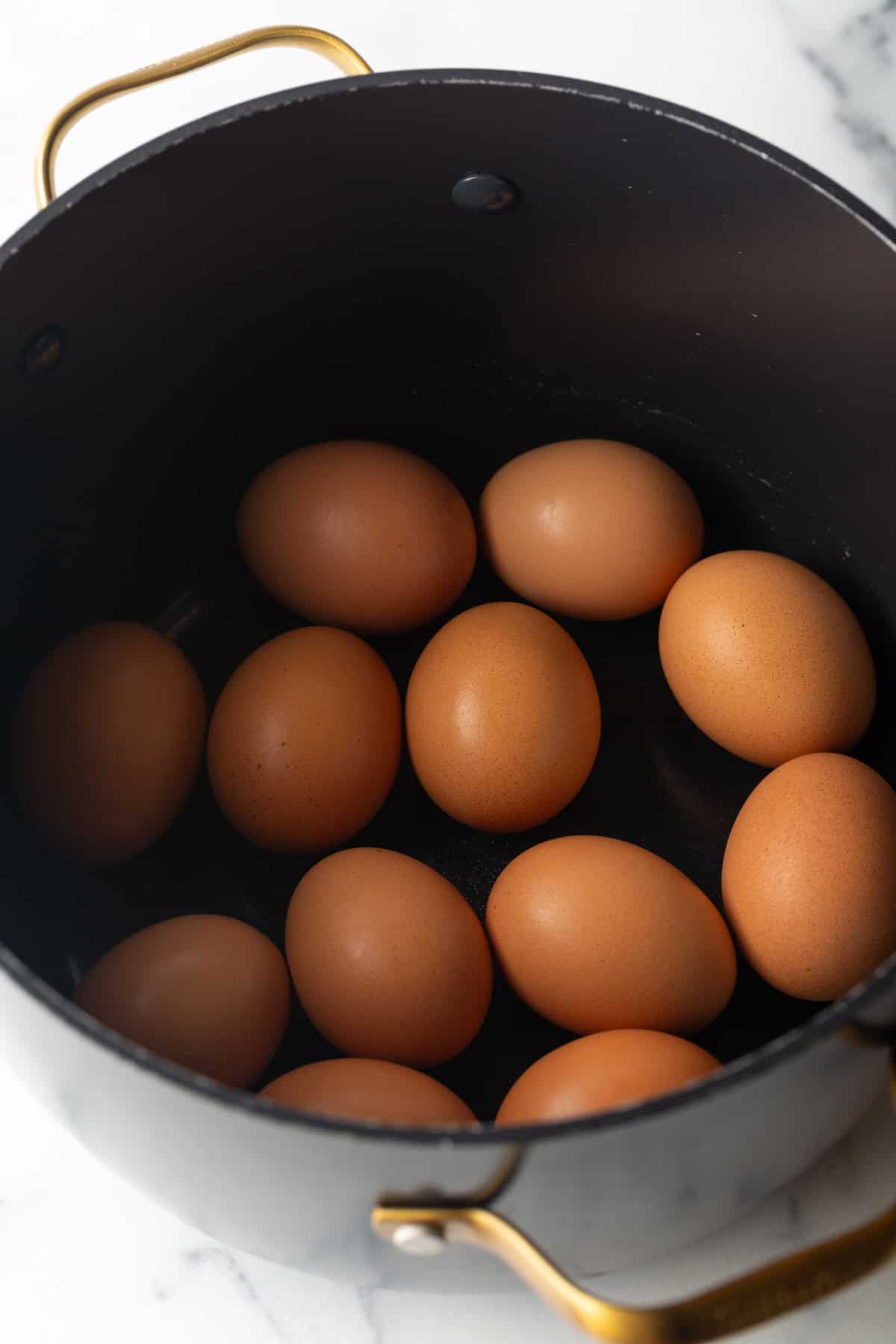
I like to boil the eggs in a large, deep cooking pot so they aren’t overlapping. They can touch, like in the pictures below, and this helps them from bouncing around a bunch in the pot… But the pan shouldn’t be overcrowded.
How to Make
Cover the Eggs – I place the eggs in a medium saucepan and cover them with cold water, making sure the water sits about 1 inch above the eggs. Then I stir in a tablespoon of vinegar or fresh lemon juice. While it’s not absolutely required, I find it helps make the shells easier to peel if any eggs happen to crack while cooking.
Find the full recipe with detailed instructions and a video tutorial in the printable form at the bottom of the post.
Bring to a Boil – Next, I place the pot over high heat and bring the water to a full rolling boil. As soon as the water starts boiling, I set a timer. Don’t start timing before the water boils… That’s the secret to getting consistent results every time.
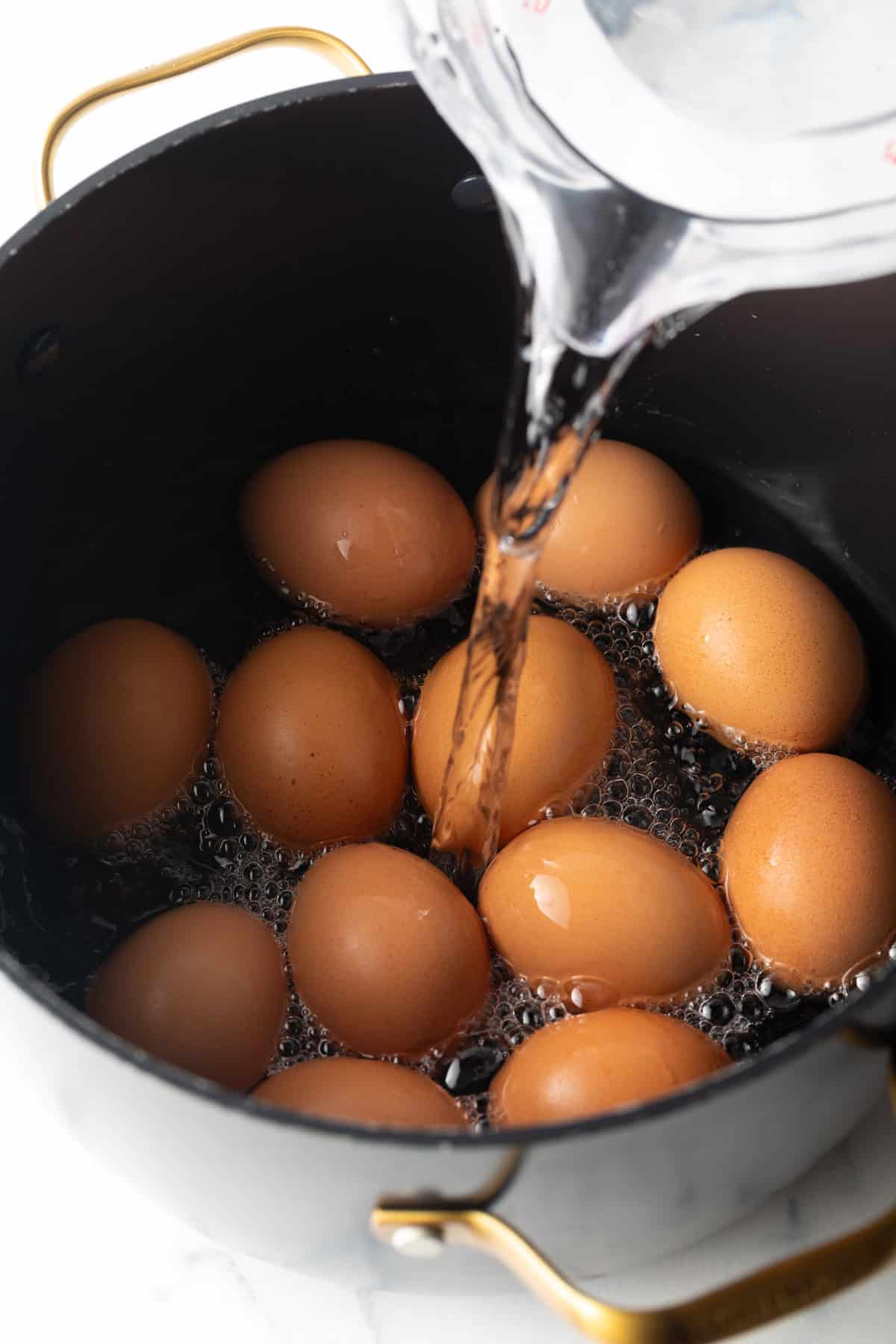
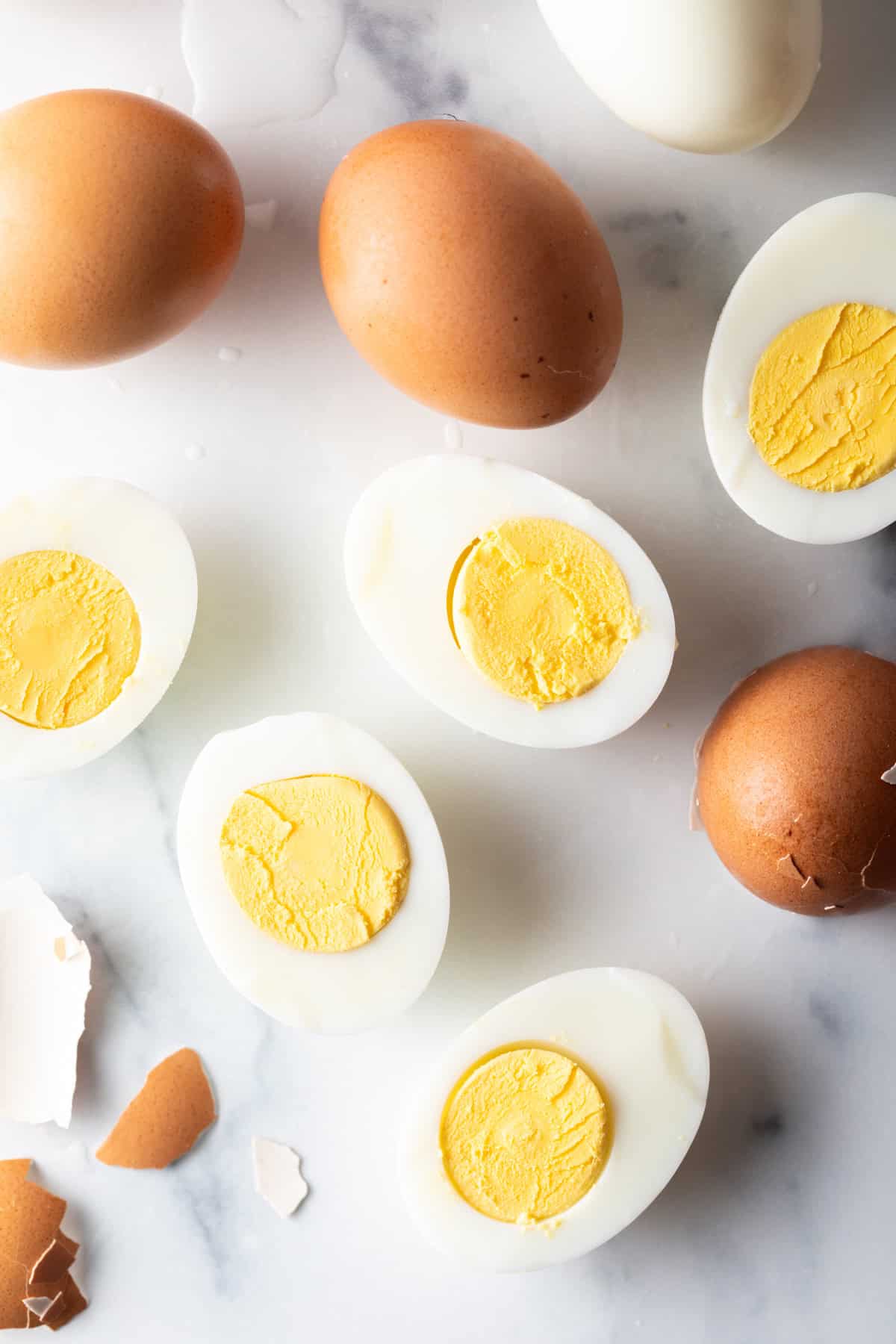
Cook to Your Preferred Doneness – If I want your hard boiled eggs to be soft boiled with a cooked but slightly softer jammy, custard-like interior, I stop the cooking process at 9-10 minutes. If I want my eggs to be fully cooked and firm throughout, I boil them in the saucepan for 12 minutes.
Pro Tip: Resist the urge to leave them in longer. Overcooked eggs often develop that gray-green ring around the yolk. They’re perfectly safe to eat, but they don’t look nearly as appetizing.
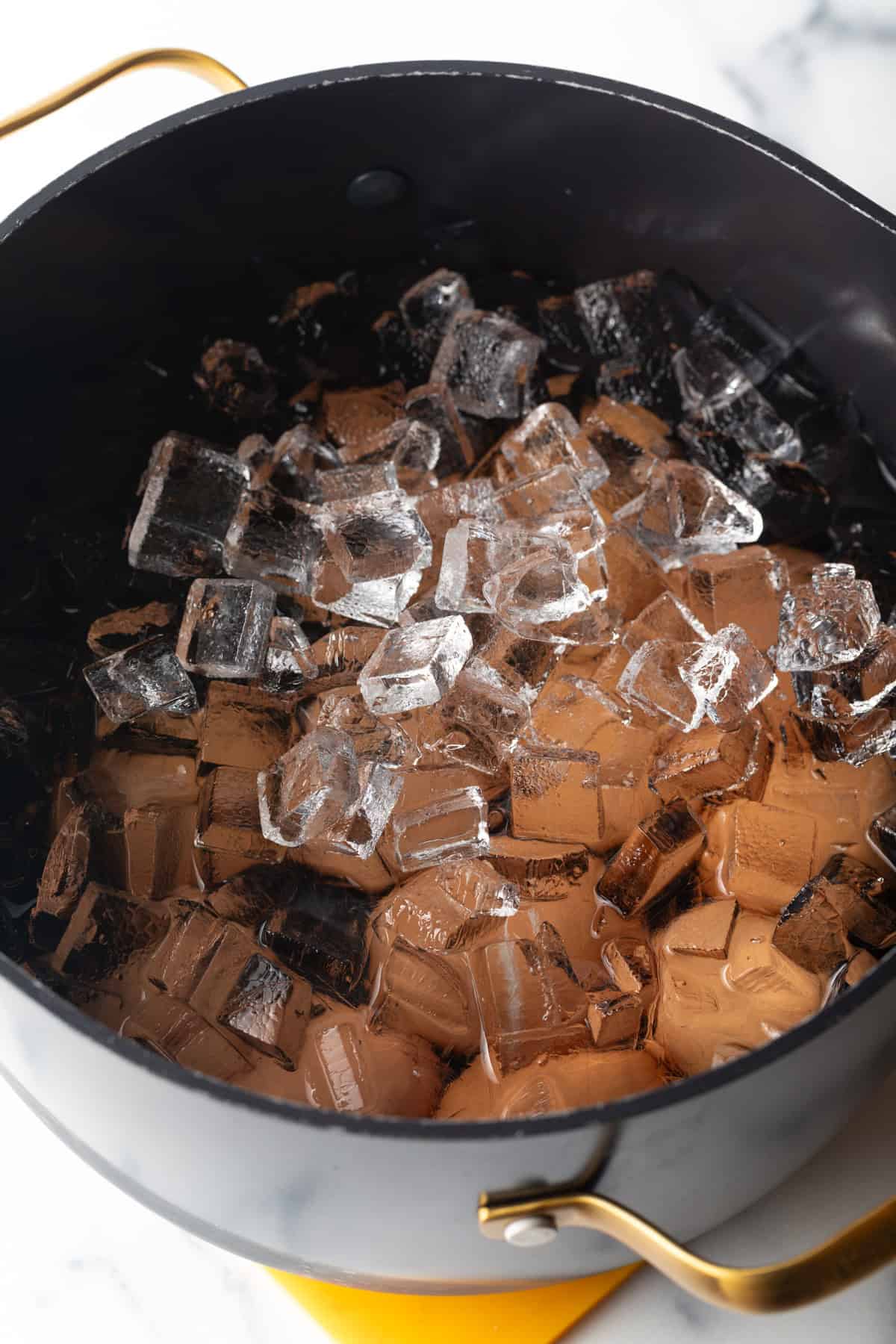
Shock the Eggs – As soon as the timer goes off, I remove the pot from the heat and immediately add plenty of ice to the water. This ice bath stops the cooking process right away, which helps keep the yolks bright yellow and makes the eggs easier to peel.
If the ice melts quickly, I pour off some of the water and add more ice. Then I let the eggs chill for 25-30 minutes before peeling.
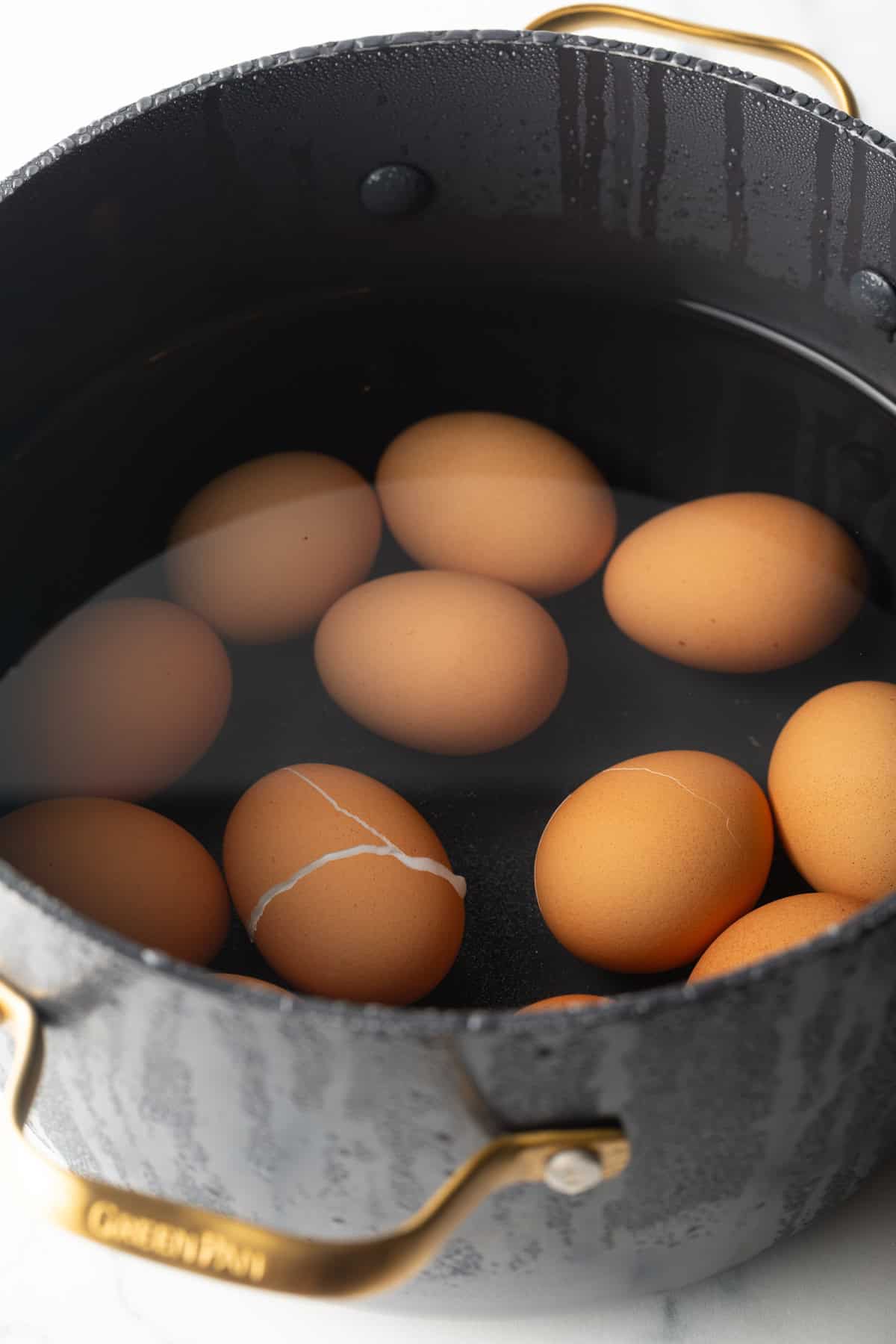
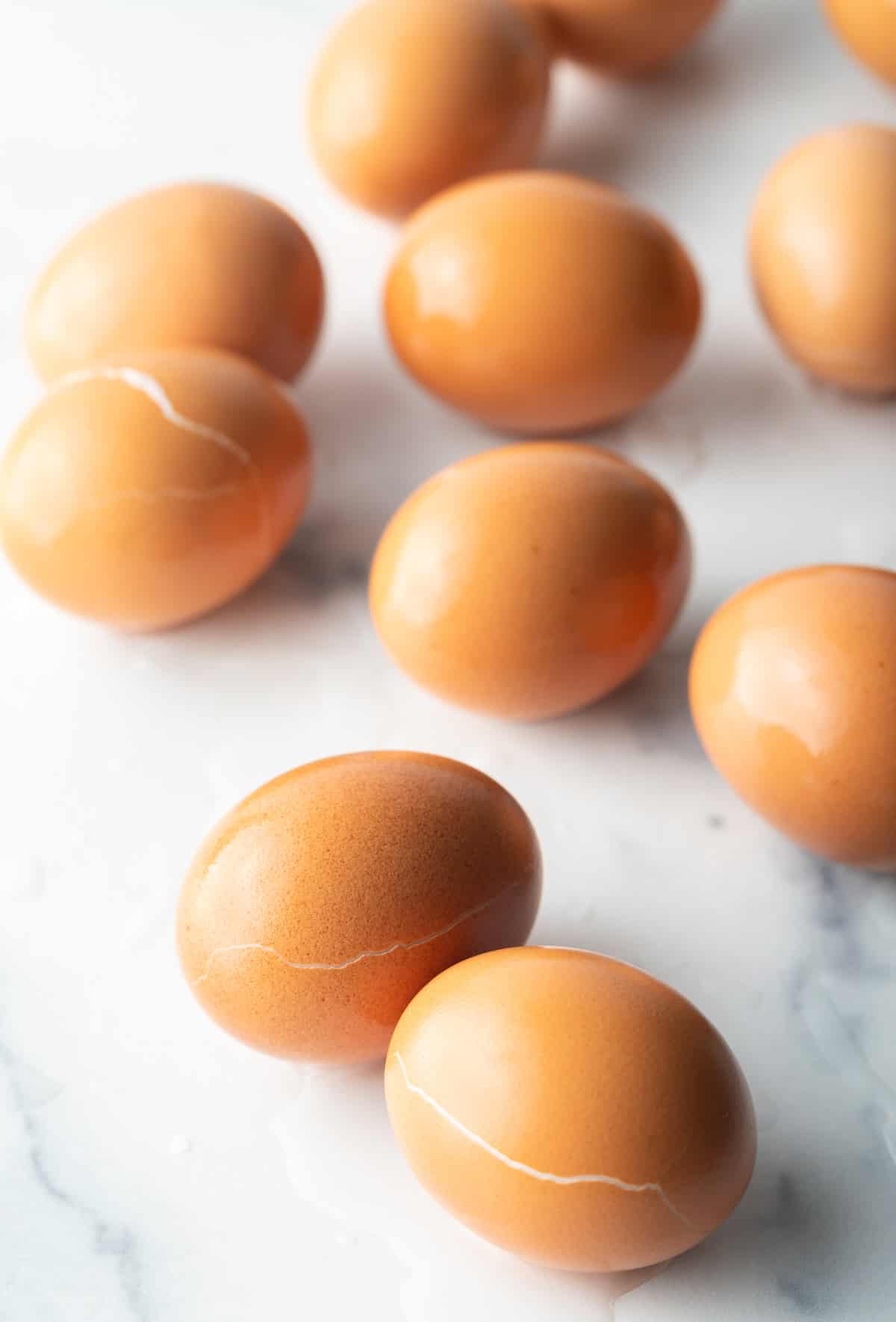
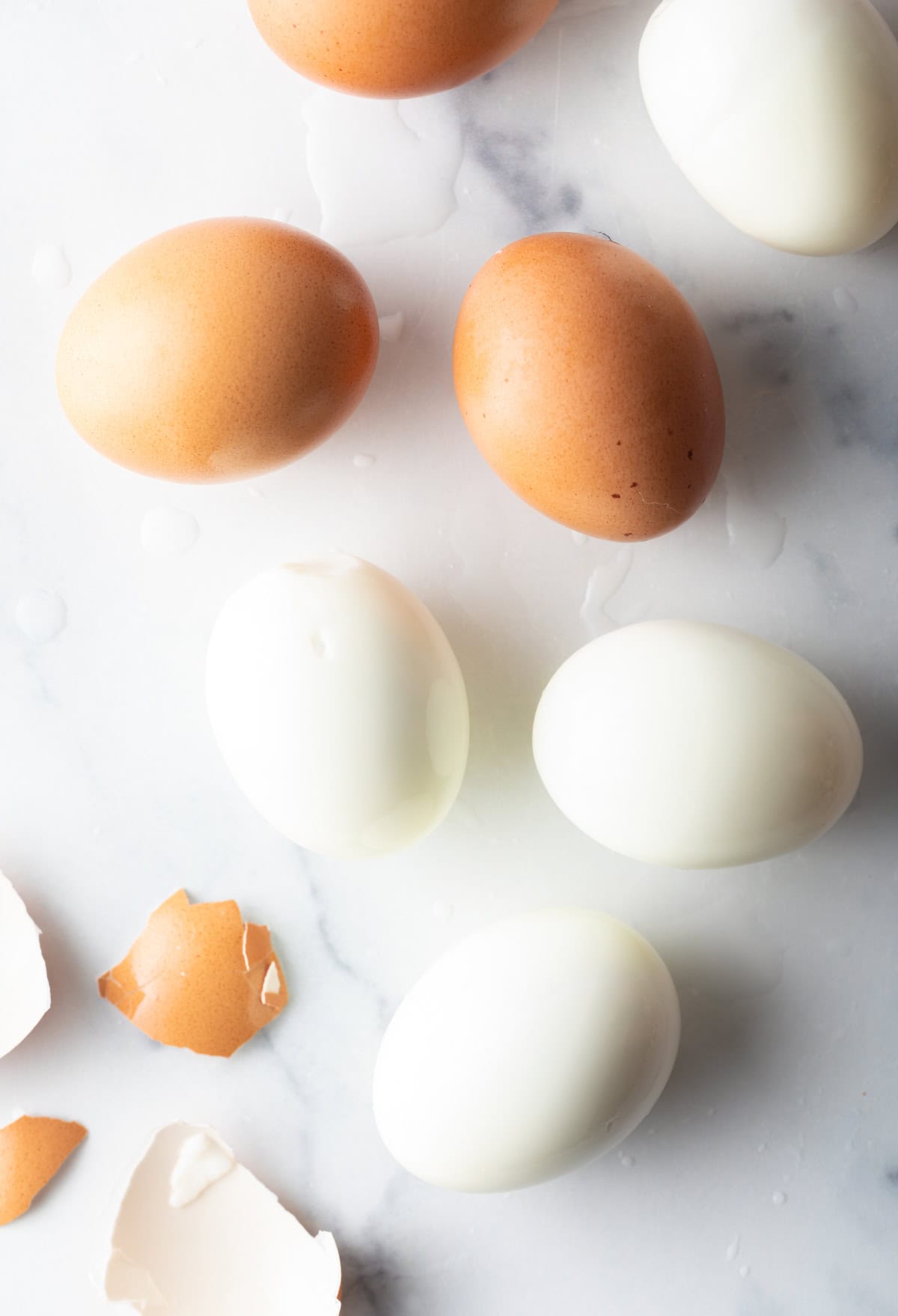
Crack, Peel, and Rinse – Sometimes a few eggs crack while they’re boiling, and I actually consider that a good thing! Once the water is cool enough to handle, I gently tap any uncracked eggs against the bottom of the pot to create a small crack. This lets a little water sneak under the shell while they continue cooling, making the shells come off much more easily.
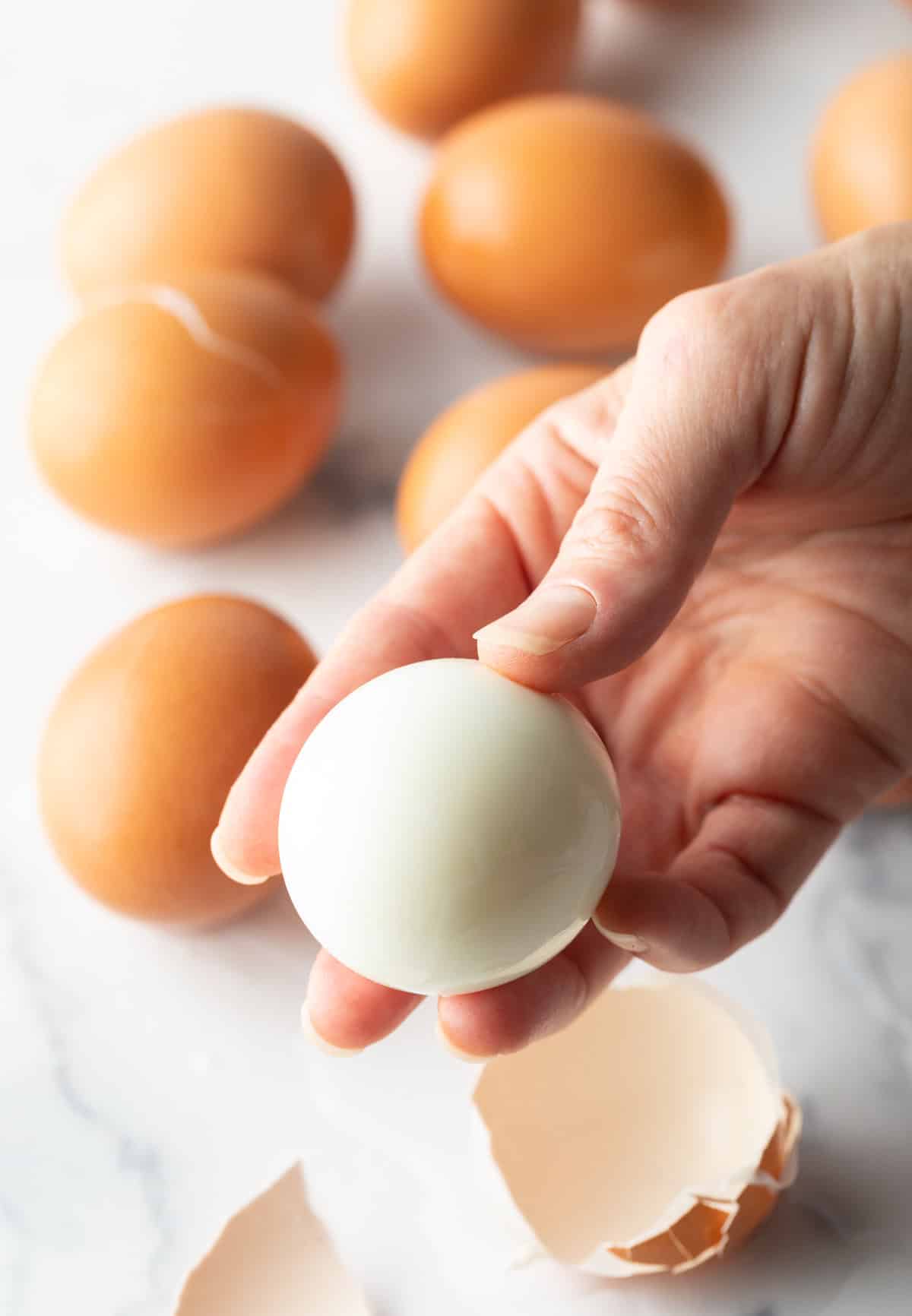
When I’m ready to peel, I gently tap each egg on the countertop until the shell is covered with small cracks. Then I remove a small section of shell and use that opening to peel away larger pieces. I always peel under a little running water if I’m dealing with stubborn shells… It works like magic!
Once all the eggs are peeled, I rinse them to wash away any tiny shell fragments. Then they’re ready to enjoy right away, or I store them in an airtight container in the refrigerator. They’ll stay fresh for up to one week, making them perfect for quick breakfasts, snacks, salads, or meal prep throughout the week.
Expert Tips
Don’t overcook hard boiled eggs – I take the pot of off the heat as soon as the water just begins to boil. I do not wait until the water comes to a rolling boil, or they’ll crack too much too soon.
Cool them quickly – The ice bath shocking process stops the eggs from overcooking, and I find it helps to keep the shells from sticking to the egg whites. Don’t skip using ice!
Tap them in water – I’ve noticed that lightly cracking the eggs a bit while they are still cooling in the water lets some of that water get into the egg. Cooling them fast and letting in water pushes the shell away from the firm whites, so it practically pops off.
Roll the eggs – But not too much! I place a hard-boiled egg sideways on a clean countertop. Then, I use the palm of my hand to gently roll the egg back and forth. I use light pressure so I’m not squishing the egg, but light cracks form across the shell.
Lift up as you peel – When I am peeling the eggs, I try to get the tips of my thumbs and fingers under the shell and peel up and away. If you try rubbing the shell away or peeling with your nails, you run the risk of digging into the egg and removing large chunks of egg white.
Serving Suggestions
I mean, really, there are SO many ways to use this delicious and versatile protein-packed powerhouse! Where do we even begin?
Let’s start with the first meal of the day: Hard boiled eggs are brilliant to have on hand for an easy breakfast by themselves, on avocado toast, or on a breakfast salad. (Yep, it’s a thing and it is SO good!).
Then it’s on to lunchtime, picnics, and potlucks with these recipes:
- Deviled egg potato salad
- Best potato salad recipe ever (seriously)
- And egg salad for egg salad sandwiches, of course!
- Guatemalan fiambre salad
Speaking of deviled eggs… This recipe is great as a base for making all kinds of deviled eggs, with some twists!
- Deviled eggs with capers AKA Angel Eggs
- Pimento cheese deviled eggs
They are also delicious for adding extra protein to warm savory dishes, like ramen noodles! Here are a few of my favorites:
Frequently Asked Questions
No, you always want to start with cold water to make perfect hard boiled eggs. Adding them to hot water will overcook them, so you can avoid the dreaded green ring in the yolk.
Either way is acceptable, but eggs with the shells left on will keep well for a few days longer.
Yes, this is a great hard boiled egg recipe for dying Easter eggs! If you plan to dye the eggs after boiling, DO NOT crack them in the water. Also, be sure to let the eggs cool completely and dry well before dying them.
More Egg-cellent Recipes


How To Boil Eggs
Video
Instructions
- Place the eggs in a medium sauce pot. Cover the eggs with cold water, until the water level reaches 1 inch above the top of the eggs. Pour in 1 tablespoon of vinegar or lemon juice.
- Place the pot over high heat. Bring the water to a boil. The moment the water starts boiling set the timer for 9-12 minutes.If you want your hard boiled eggs to be soft boiled with a cooked but slightly softer custard-like interior, stop the cooking process at 9-10 minutes. If you want your hard boiled eggs to be fully cooked through, boil for 12 minutes.
- Once the timer goes off, remove the pot from heat and quickly fill the pot with ice to bring the temperature of the eggs down and stop them from cooking. *Do not boil longer. Overcooked yolks often form a grayish-green ring around the yolk. It’s safe to eat, but not very attractive.Dump off some of the cold water if needed, then add more ice. Allow the eggs to cool, shocking them for at least 25-30 minutes before peeling.
- Some of the eggs might have cracked while cooking. This is actually a good thing, and makes it easier to peel later. Once the water is cool enough for you to put your hand in, gently tap the uncracked eggs on the bottom of the pot to create a crack. This will allow water to enter under the shell while cooling.
- Remove the eggs from the ice water. Gently tap the eggs on a hard surface to continue cracking the shell. Remove a section of eggshell that’s the most obvious opening. Then use the opening to peel off larger sections of the eggshell.
- Once all the eggs are peeled, rinse them in water to remove any debris.
- Either serve the eggs, or place them in an airtight container and keep refrigerated until ready to use. Hard boiled eggs will keep for up to a week if stored well.
Notes
- Start with older eggs. When eggs have been sitting in the fridge longer the shell and cooked egg inside separate more easily.
- Add an acidic ingredient to the water. Adding a little splash of vinegar or lemon juice helps soften and loosen the egg white from the shell while boiling.
- Gently crack the eggs before resting in ice water. This allows a little water to seep in between the shell and egg layer.
- Shock the eggs in ice water after cooking. This not only stops the egg yolk from cooking too much inside the eggs (creating the dreaded gray ring) but makes the shells much easier to peel off.
- When ready to peel, gently roll the eggshell on a solid surface to create small cracks around the egg. Then peel back one bit, and use the opening to peel off larger sections of the eggshell. Rinse the egg and cold water after peeling to make sure you’ve removed every bit of eggshell debris.


Absolutely perfect! I followed the steps exactly, and the eggs turned out flawless
I’ve tried so many methods for hard boiled eggs, and this one finally nailed it. The eggs were cooked just right, and the shells practically slid off. Highly recommend for anyone who’s struggled like I have!