

Fajita Marinade
 by Sommer Collier — on Aug 5, 2026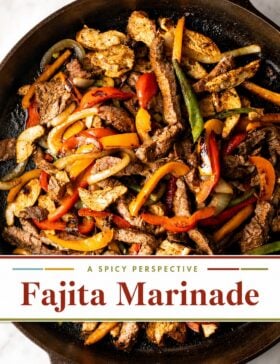
My homemade fajitas are as good, I think they’re better than most restaurants. The key is a delicious marinade with just right combination of savory liquid smoke, Tex-Mex seasonings, and perky lime juice. I love whipping up this quick zesty fajita marinade and then allowing steak, chicken, or seafood to soak in it throughout the day. Then dinner is a snap to throw in a skillet and sizzle up some meat and veggies!
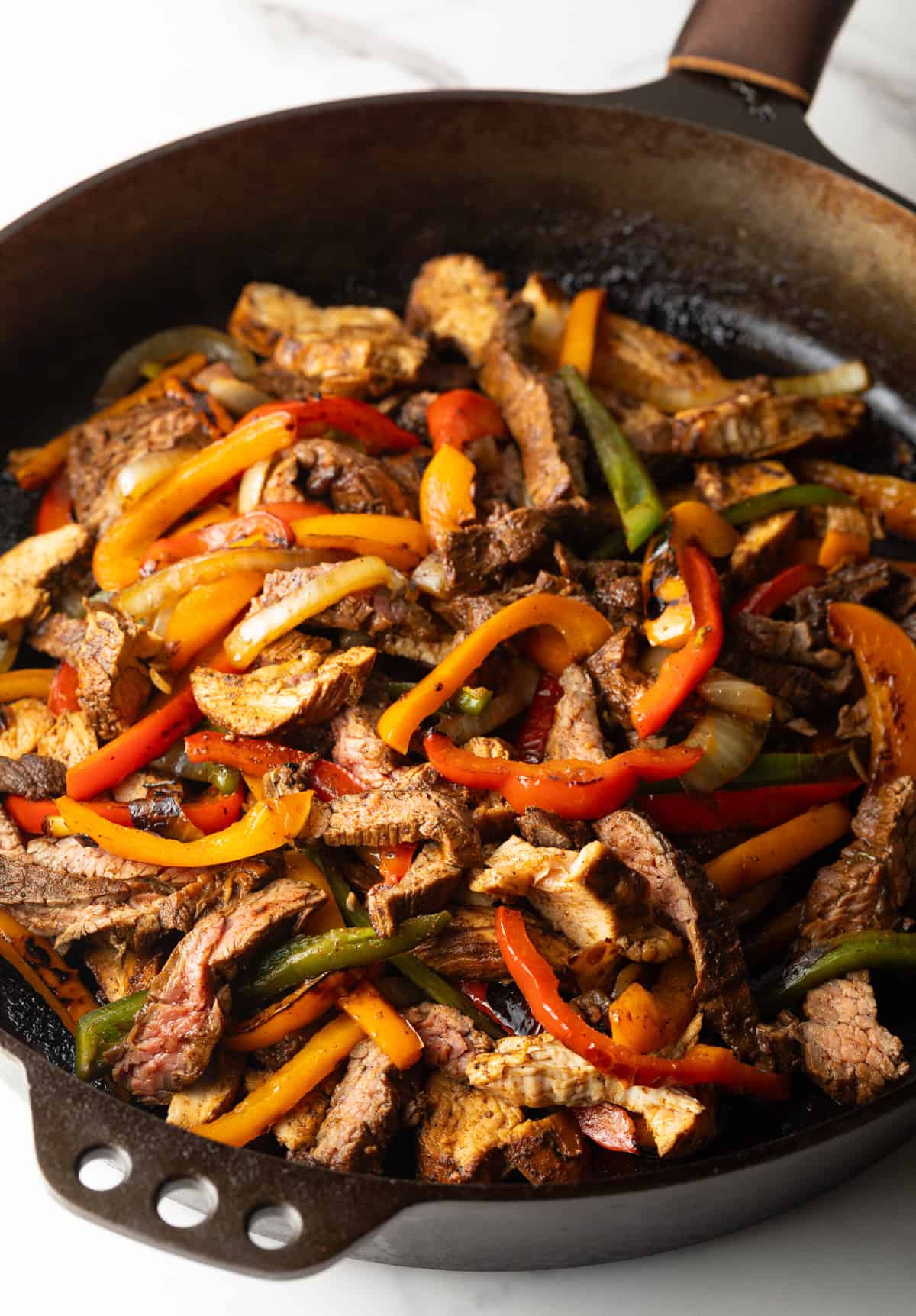
Fajitas with beautifully seared steak, veggies, and a stack of tortillas used to be one of my favorite Mexican restaurant dishes. I mean seriously, is there any better sound or smell than when a steaming hot skillet of meat and veggies enters the room? But to be honest, it’s so easy to make amazing fajitas right at home that now I never bother ordering them when eating out! This is truly the perfect all-purpose fajita marinade to use for any type of protein you like including steak, chicken, or seafood. And the recipe couldn’t be any easier… Like my carne asada recipe, I add the marinade ingredients to a dish with the meat, keep it in the fridge for an hour or two, then sear, slice, and serve! You can even get this recipe going nearly a whole day before you plan to cook the fajitas. Either way, I sear the meat and veggies in one pan and they’re ready to serve with warm tortillas in 10 minutes!
Table of Contents

Sommer’s Recipe Highlights
Amazing Flavor – Nothing makes pieces of meat and seafood taste more flavorful than a good (nay, great) marinade! The citrus from the lime gets all of the seasonings and spices worked deep into the meat. Olive oil and liquid smoke together bring out the umami flavor, and make the proteins extra juicy and tender!
So Easy – This fajita marinade is similar to my steak taco marinade… I use a lineup of simple but quality ingredients to elevate even the most humble skirt steak or flank steak to a restaurant-quality dish. In the evening I’ll throw together the marinade mix in less than 5 minutes before bed. The meat does it’s thing overnight, and by dinnertime the next day, I’m ready to sear up the most juicy and delicious beef, chicken, or seafood fajitas!
Made Your Way – With just one marinade you can make SO many variations of delicious fajitas, however you like them! Choose your favorite protein to cook, use it in tortillas or on a salad, and load on whatever Tex-Mex-type toppings you like. You know I have a several ideas and suggestions below!
Key Ingredients and Tips
- Olive oil – I prefer olive oil for its mild flavor. Other neutral-tasting oils like avocado or canola also work well.
- Limes – I use both the zest and juice of the limes, so the citrus flavor is popping!
- Seasoning – In this marinade I love a combo of ancho chile powder, smoked paprika, ground cumin and salt.
- Liquid smoke – I recommend using mesquite or hickory liquid smoke to get that great umami flavor, without actually having to smoke the meat.
- Garlic – Do yourself a favor and use real garlic cloves here, not the chopped up stuff in a jar. You don’t even have to mince it! Simply peel and smash the cloves, and toss them in.
- Meat – Really, you can use the fajita marinade on nearly any protein! Try it with sirloin, skirt steak, or flank steak, chicken breast or thighs, shrimp, scallops, or other kinds of seafood.
- Veggies – I’m using classic bell peppers and white onions to make my fajitas. Feel free to add in whatever other hearty veggies you like, so long as they can hold up well to high-heat searing in a skillet.
- Butter – My not-so-secret ingredient for cooking the meat and peppers… Butter makes the meat extra juicy!
How to Make
Find the full ingredient proportions, detailed instructions, storage tips, and a video tutorial in the printable form at the bottom of the post.
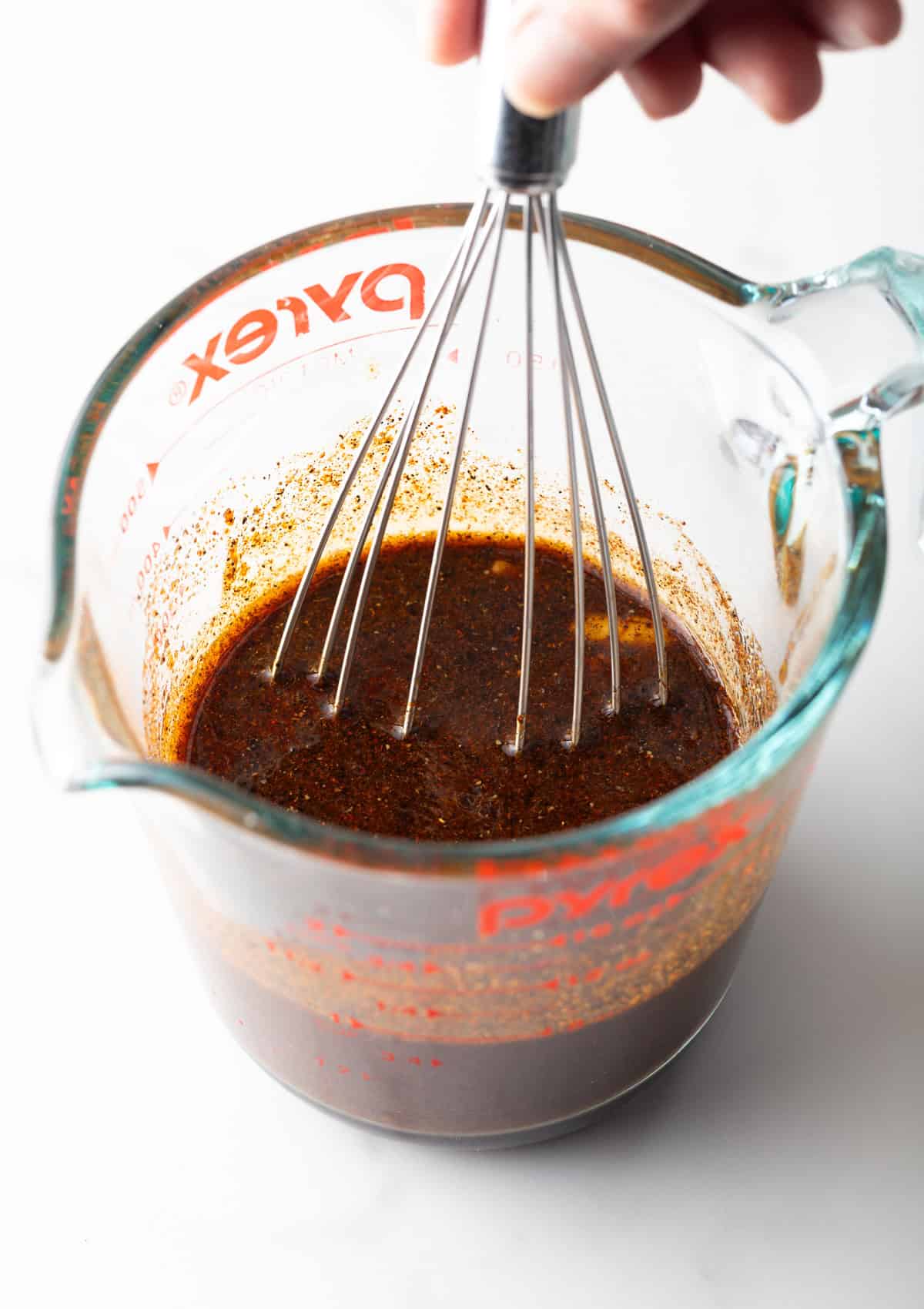
Make the Marinade – I start by getting out a large glass measuring cup (a large bowl will also work), whisk, and baking dish or large plastic ziploc bag. I add all of the marinade ingredients into the cup: Olive oil, lime juice, water, ancho chile powder, smoked paprika, ground cumin, liquid smoke, garlic, salt and pepper. No particular order necessary, just get them all in the bowl.
Then I give everything a good whiskin’ to combine.
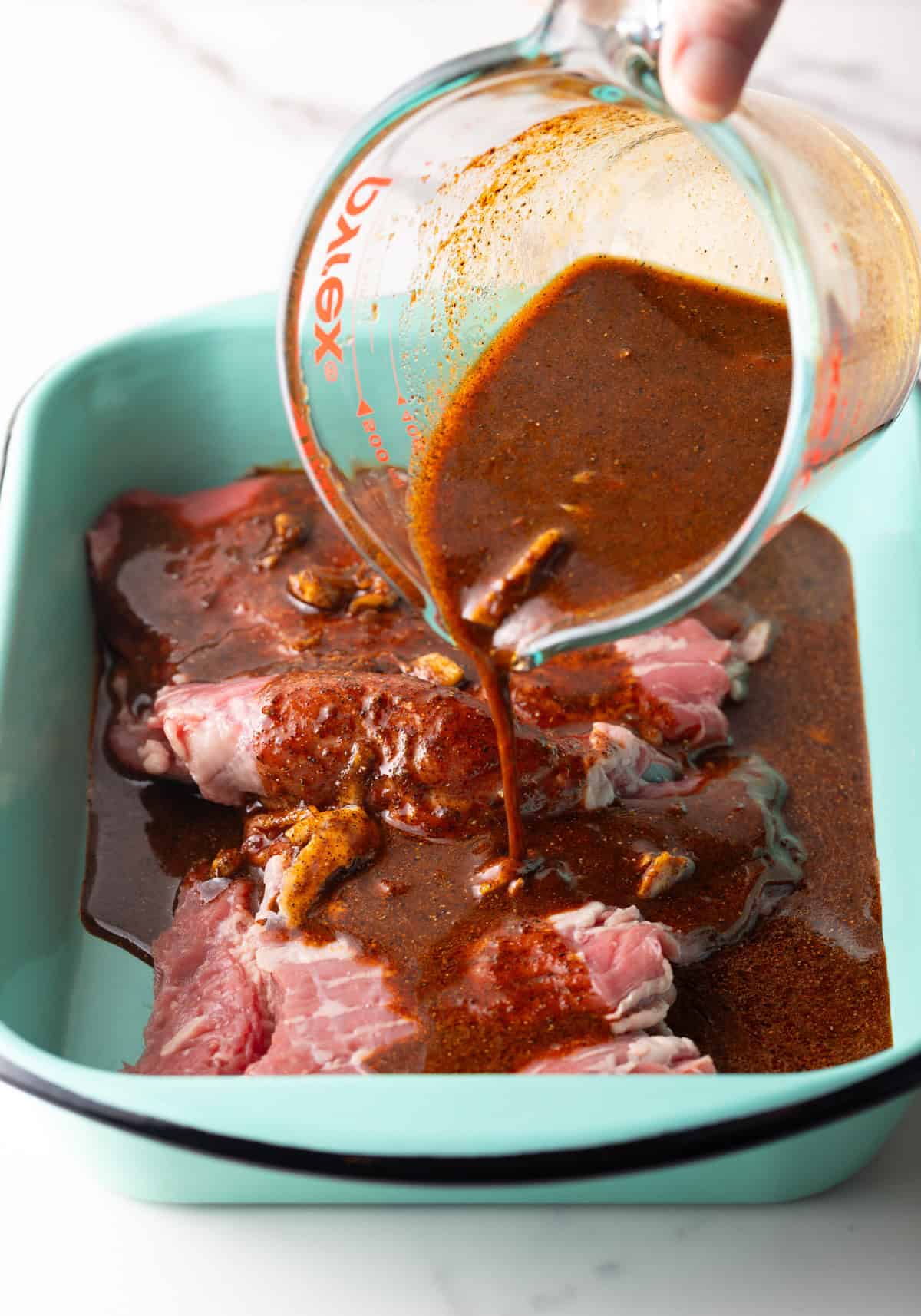
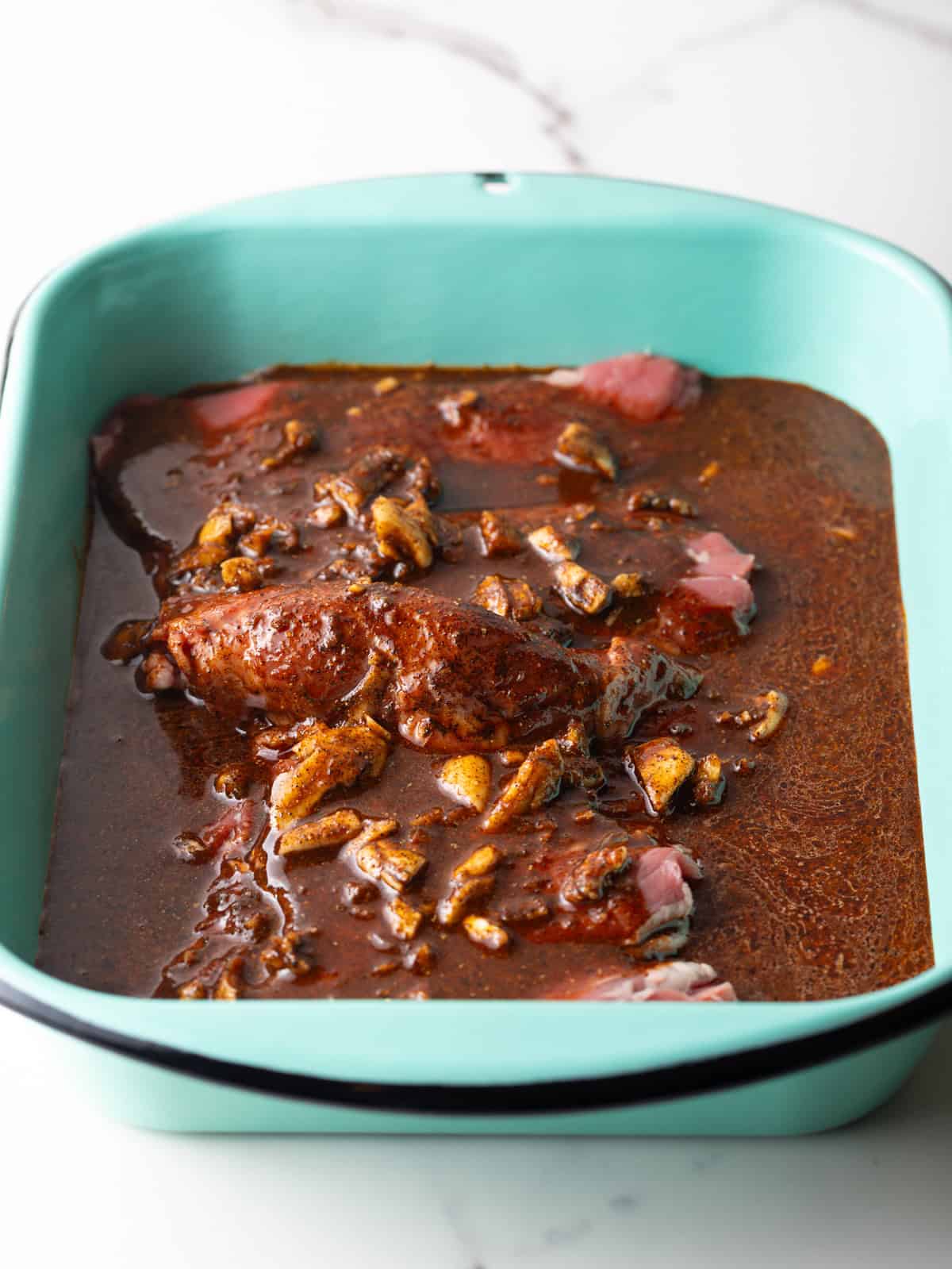
Marinate in the Marinade – Next, I place the steak, chicken, seafood or whatever protein I’m using into the baking dish or ziploc bag. Then carefully pour the marinade over the meat, so every bit gets soaked. No, the meat likely won’t be totally submerged in the liquid. I wiggle the dish around to get everything as well-coated as possible.
Now I pop it in the fridge for at least 1 hour if I’m using a hearty meat, like steak or chicken. However, marinating for several hours or even overnight is best! Seafood like shrimp and scallops are much more delicate, so they only need to marinate for 30 minutes or so.
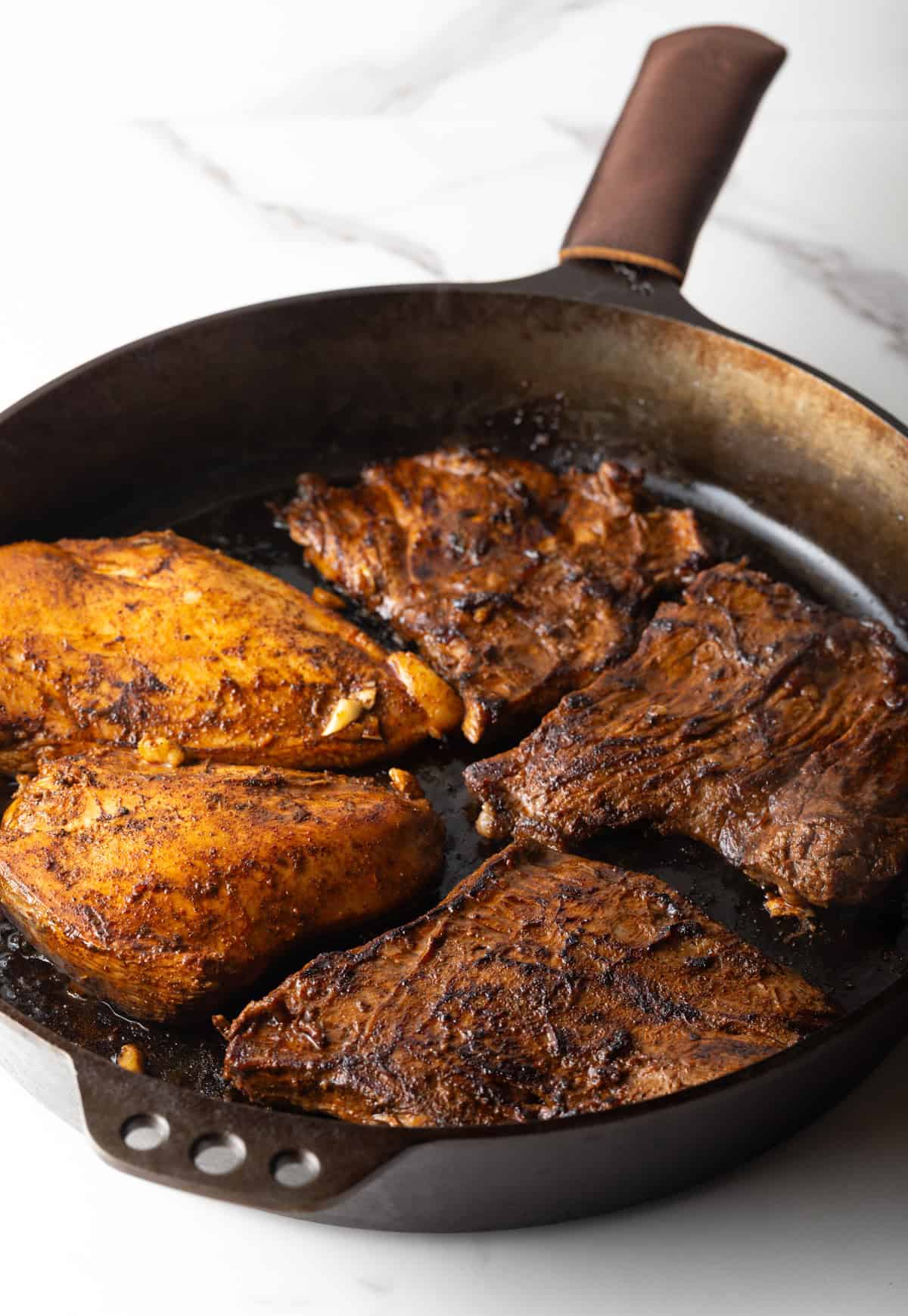
Sear the Meat – It’s time to get cooking! I get out my cast iron skillet (a large heavy-bottomed pan works well, too) and put it over medium-high heat on the stovetop. As it heats, I add the butter into the pan and watch it melt. Then I use tongs to pluck the meat out of the marinade, give it a ‘lil shake to get off any excess sauce, and carefully place it in the hot pan. Discard the marinade after removing all of the raw meat.
Depending on how thick the pieces of meat are, I’ll sear them from 1-5 minutes per side until there’s a nice dark brown crust all the way around.
I find that hearty cuts of steak, that are over an inch thick, cook perfectly at 3-5 minutes per side, depending on how medium-rare or well-cooked you like your beef. Chicken pieces take 5-6 minutes per side, and must be thoroughly cooked to 165 degrees inside before considering safe to eat. Seafood, like shrimp or scallops, only need to sear for 1-2 minutes per side. When done, I transfer the pieces of meat to a plate to rest. But keep that stovetop heat going!
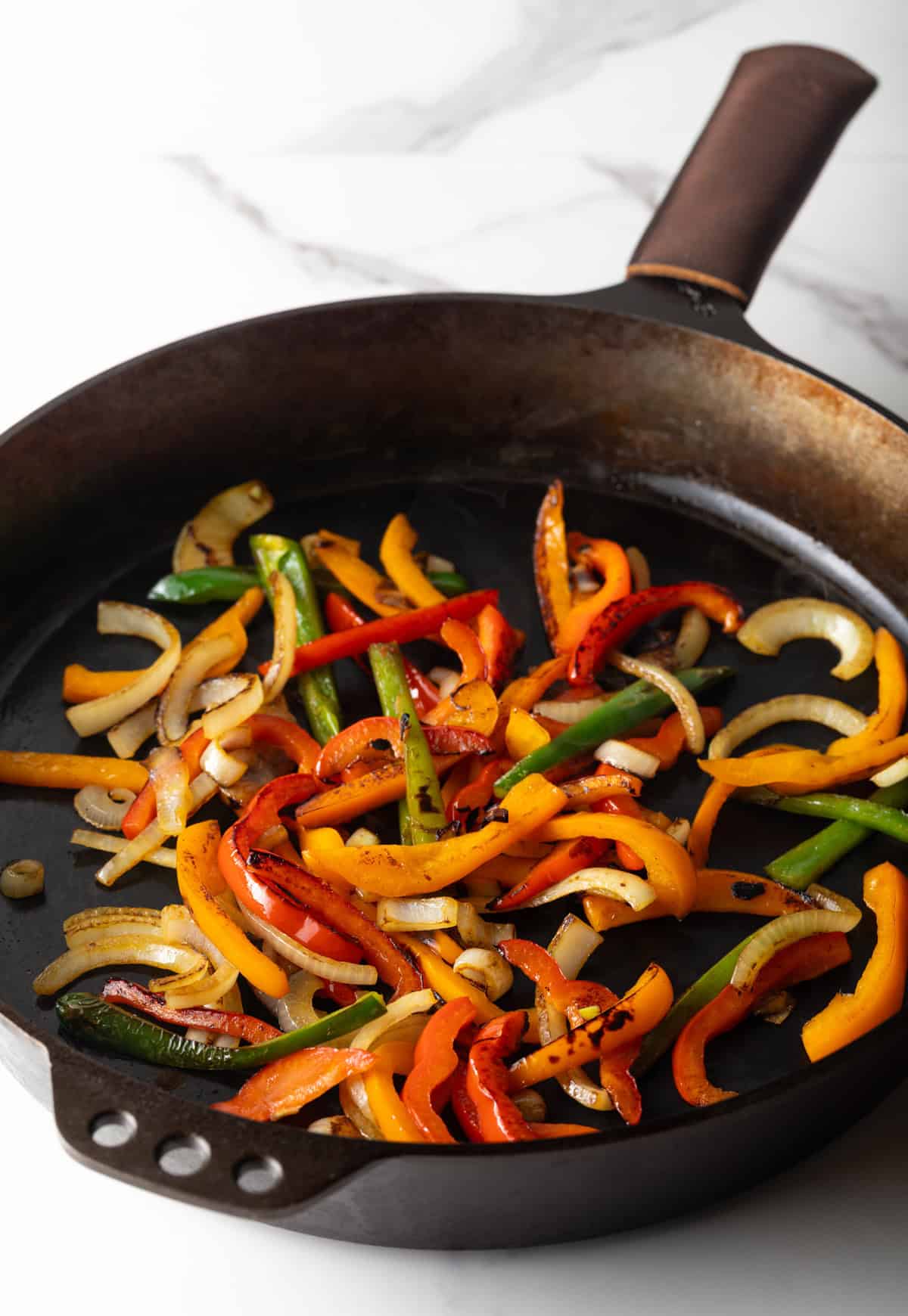
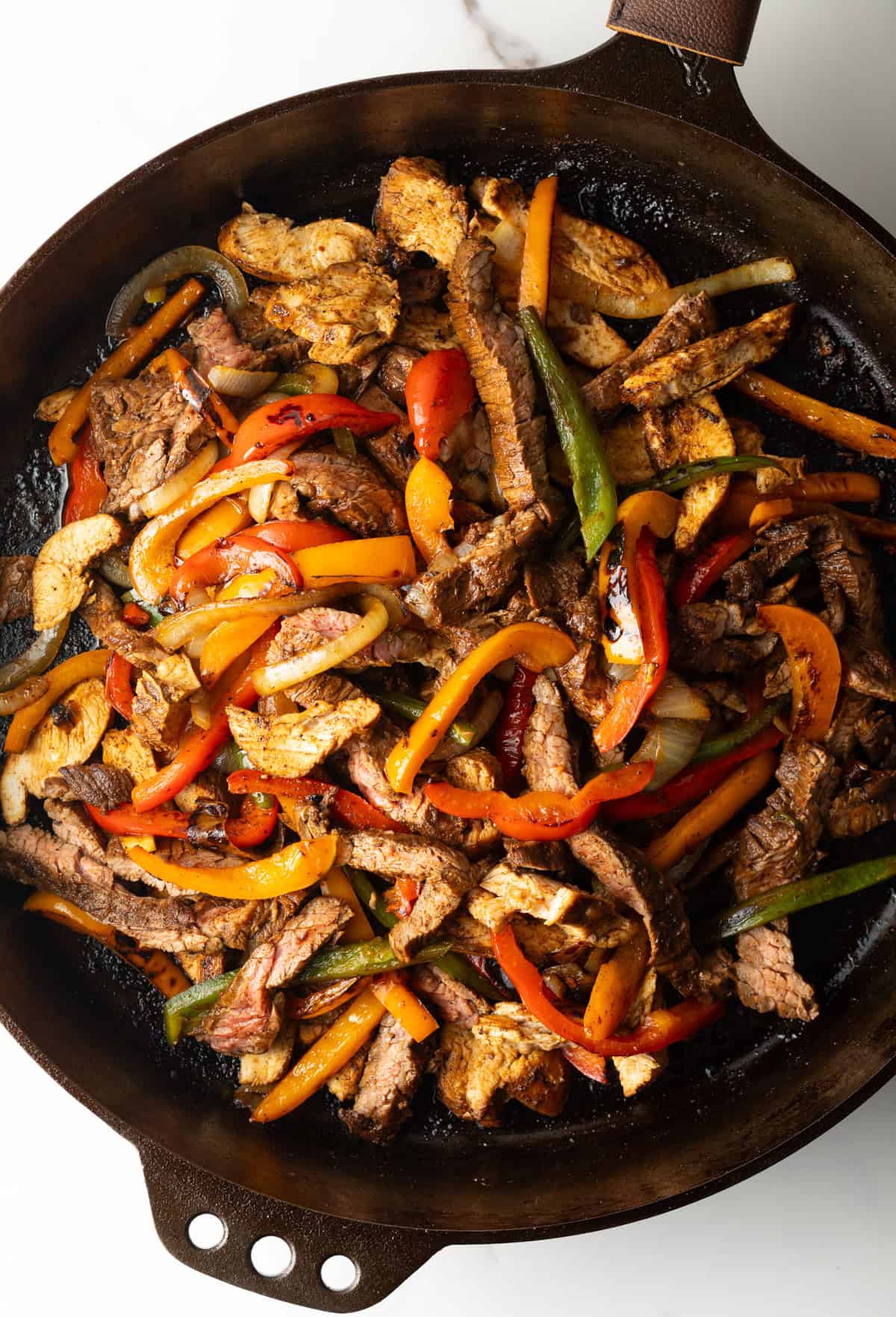
Sear the Vegetables – Next, I scrape any big bits of crust out of the bottom of the pan and add a bit more butter. Once the butter has melted I toss in the sliced peppers and onions. Keep stirring the veggies in the hot pan until they get a nice light char as well. This usually takes only about 5 minutes.
Add Meat to Veggies – While the veggies are cooking, I’m also slicing the meat after it’s rested for 5 minutes or so. Be sure to slice steak against the grain, which means perpendicular to the muscle fibers in the meat that run up and down, similar to a piece of wood.
Then I add the pieces of marinated meat back to the skillet and stir everything around to get the meat warm again. Be careful not to overcook the meat!
Expert Tips
When it comes to marinating meat, I live by 1 rule: Don’t. Rush. The process. Steak and chicken need a solid hour in the fajita marinade to get the incredible umami flavor. Plus, the acid from the lime juice needs time to do its job and tenderize the meat. But as I noted earlier, the longer you marinate the proteins the better… To a point. Yes, I recommend marinating for several hours, even overnight, but too much longer and that acid will begin to break down the protein and cause it to get soft. We want tender meat, not mushy!
Along those same lines, don’t try to “save time” by cooking the meat and veggies together. Starting them at the same time will cause either the meat to be underdone or the veggies to be overcooked. Plus, overcrowded pan equals soggy food, and the whole point is to get that beautiful sear all around.
Yes, when it comes to steak and chicken, you really must let the larger pieces of meat rest before slicing. The juices essentially get seared inside of the protein, and resting them lets that flavor and moisture get evenly distributed again. If you slice into the meat too soon, there goes all of the juiciness out onto the cutting board!
Serving Suggestions
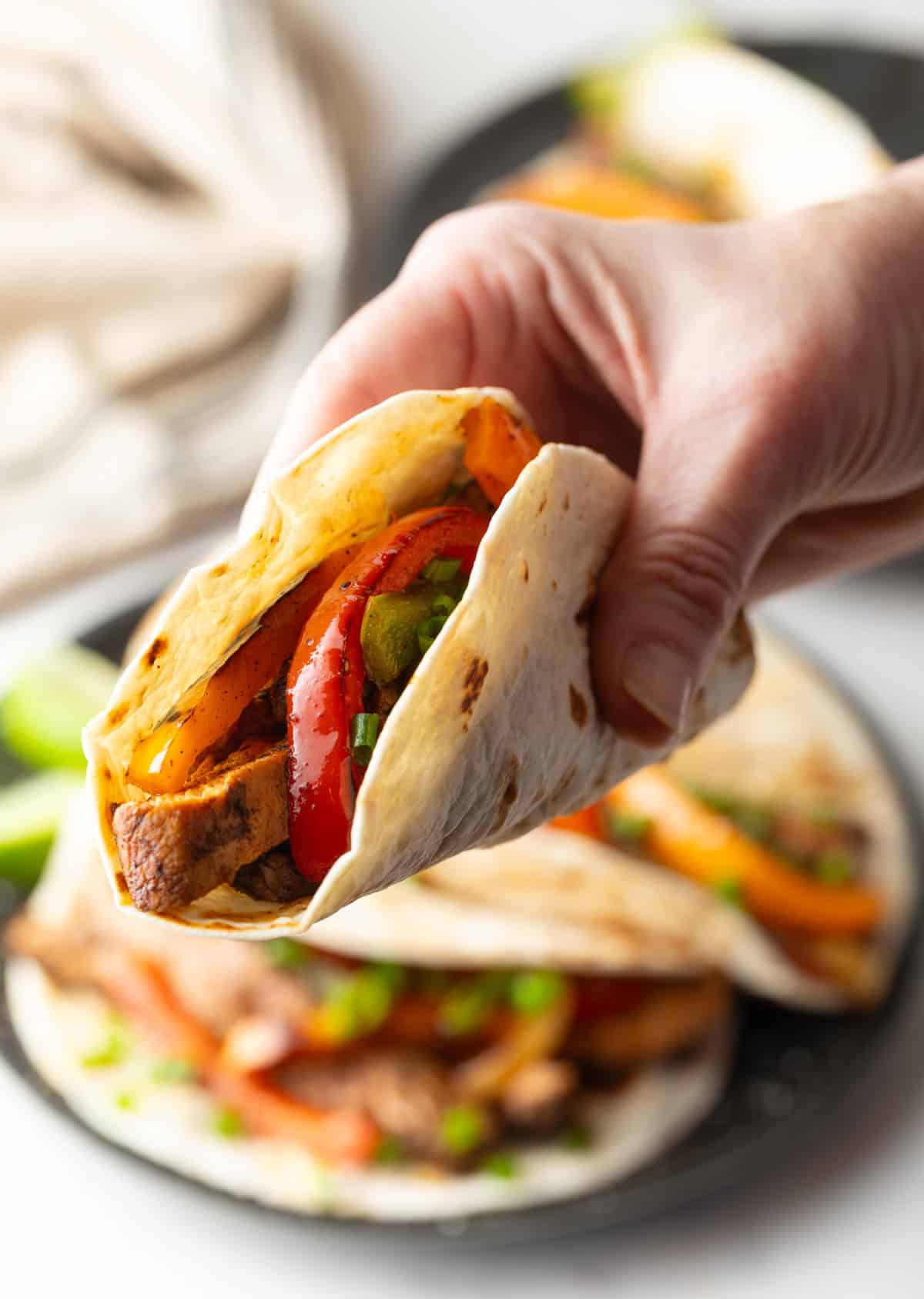
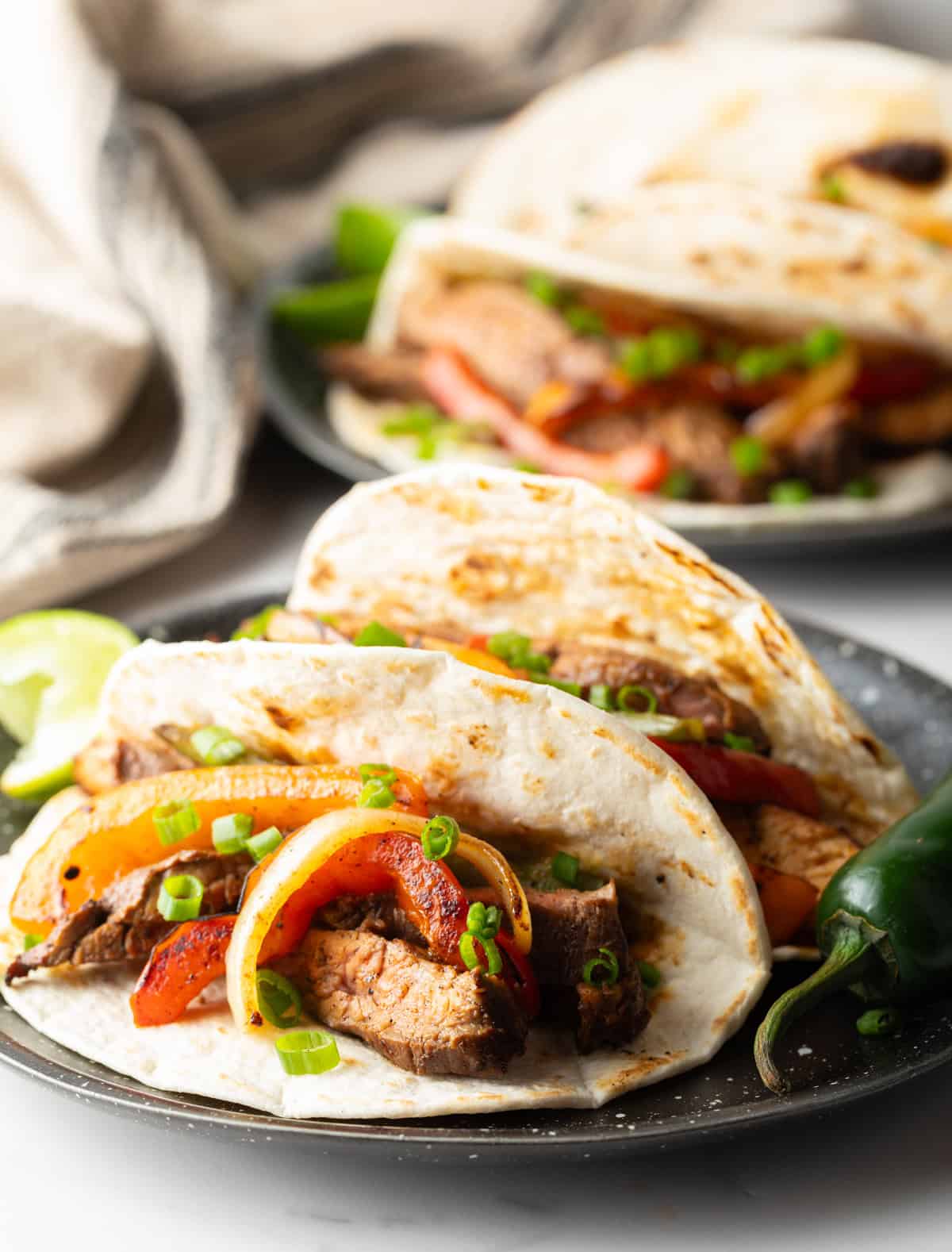
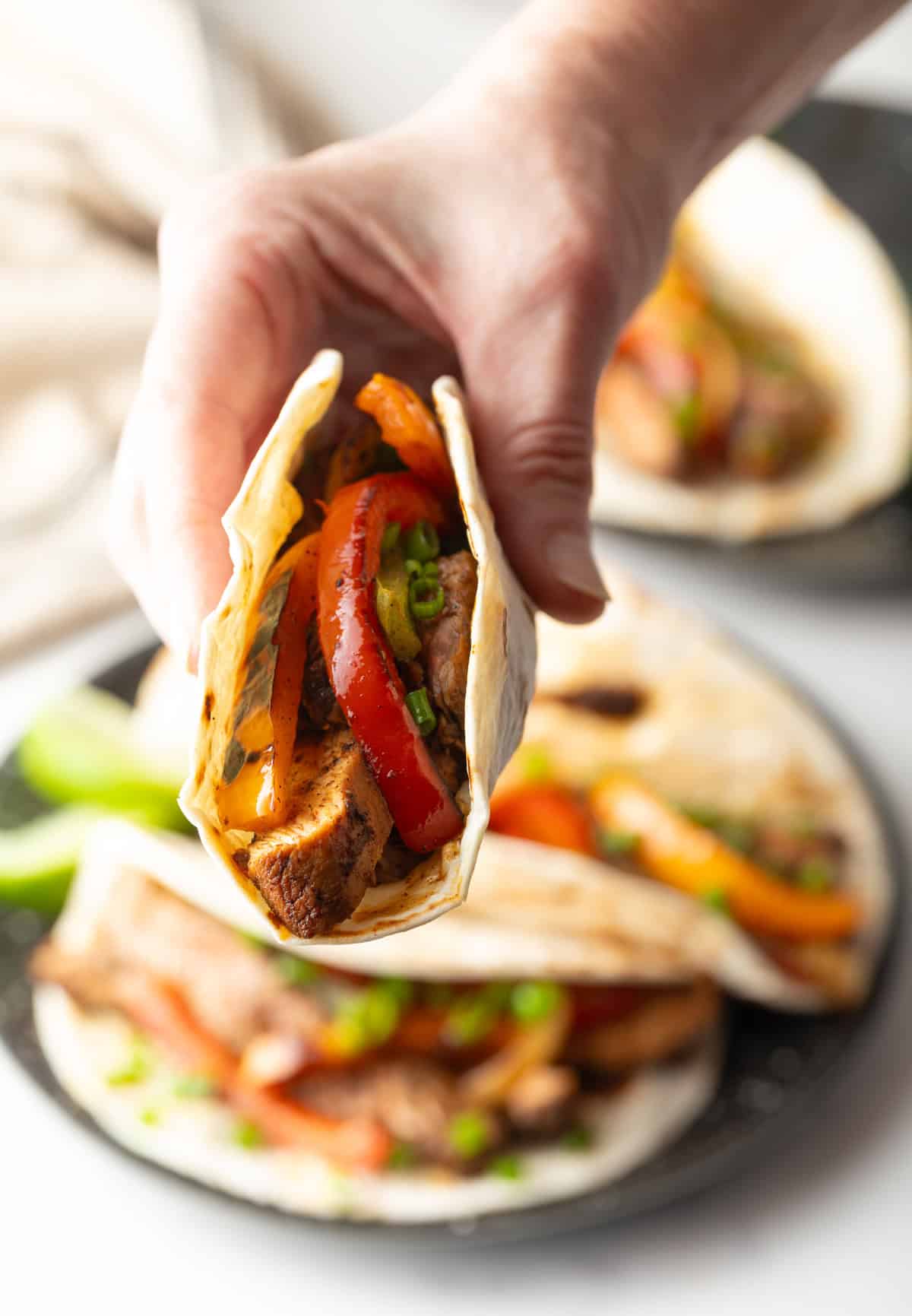
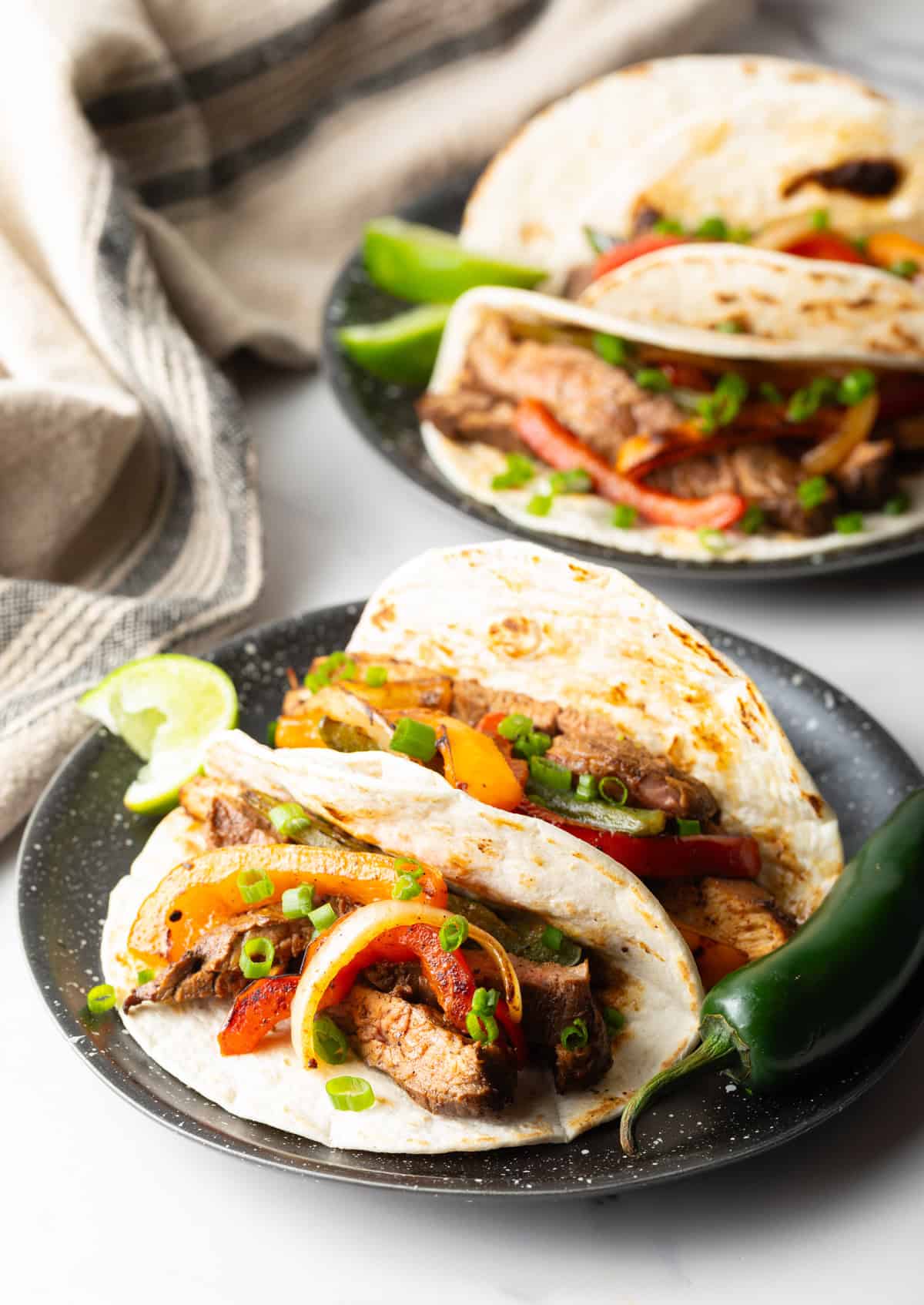
I serve these smoky, savory, and tender pieces of meat and veggies with soft tortillas, lime wedges, and a sprinkle of sliced green onions. Use flour tortillas for the best Tex-Mex restaurant-style fajitas.
They are also fabulous with a dollop of sour cream, side of guacamole or fresh slices of avocado, pico de gallo, shredded cheese, and/or a dash (or three) of hot sauce!
Want to really have that “authentic” Mexican-American eatery experience? Make it a full platter and serve fajitas with rice and beans.
- Arroz Amarillo (yello rice)
- Spanish rice
- Cilantro lime rice (an incredible Chipotle copycat!)
- Mexican Pinto Beans
- Refried Beans
Or scoop over mixed greens to make a fajita salad! My avocado lime ranch dressing is perfect to drizzle on top.
Storage Notes
The marinade itself will keep well for several days or even up to a week stored in an airtight container and kept in the fridge.
Once the marinade has been used to cook it should be immediately discarded. The cooked meat stores very well and is great for leftovers! Steak and chicken will still be flavorful for up to 4 days in the fridge, seafood should be kept for only 2-3 days max. The peppers and onions can be kept in the same container, but note, that they’ll start to get soft and soggy after a few days.
You can freeze the seared cooked meat for up 3 months by first sealing it tightly in a plastic ziploc bag. However, I do not recommend trying to freeze the veggies! They don’t hold up well to freezing, thawing, and reheating. I simply sear fresh peppers and onions when I’m reheating the meat to make fajitas.
Frequently Asked Questions
For an easy fajita marinade with some kick, I suggest adding a pinch of cayenne pepper or crushed red pepper to the lineup of spices. Or like my beef kabob marinade you can add a few dashes of hot sauce to the mix.
When working with chicken or steak I wouldn’t keep the meat in the marinade more than 24 hours, tops. Seafood should only marinate for up to an hour or so. Any longer and the proteins will be over-tenderized and unpleasantly soft.
Chewy fajita meat usually means it was either under-tenderized or overcooked. Or both :(
Seriously, you’ve got to let the fajita marinade works its magic for a minimum of 1 hour. Then cook the meat for just a few minutes on each side. Follow these two steps and I practically guarantee your fajitas will be fabulous!
Help Me Spread the Word about this Fabulous Free Recipe! Sharing this recipe link on Pinterest and Facebook is super impactful, and I greatly appreciate it! Find the share buttons below the recipe form.
More Global Favorites Recipes



Fajita Marinade
Video
Ingredients
For the Marinade –
- ¼ cup olive oil
- ¼ cup fresh squeezed lime juice + 1 teaspoon lime zest
- ¼ cup water
- 1 ½ tablespoon ancho chile powder
- 2 teaspoon smoked paprika
- 1 teaspoon ground cumin
- 1 teaspoon liquid smoke mesquite or hickory
- 4-6 cloves garlic smashed
- 1 ½ teaspoons salt
- ½ teaspoon black pepper
For the Fajitas –
- 2-3 pounds steak chicken, and/or seafood
- 3 bell peppers seeded and sliced into ½ inch strips
- 1 large onion peeled and sliced into ½ inch strips
- 2 tablespoons butter or oil
- 12 tortillas
- Garnishes: lime wedges pico de gallo, sour cream, avocado, shredded cheese, etc.
Instructions
- Set out a small bowl or measuring pitcher. Combine the olive oil, fresh lime juice and lime zest, water, ancho chili powder, smoked paprika, ground cumin, liquid smoke, smashed garlic cloves, salt, and pepper. Whisk well.
- Place the protein in a baking dish (or a large zip bag). Pour the marinade over the top of the protein. Wiggle it around in the marinade to make sure it’s coated on all sides. Then cover the baking dish and place in the refrigerator for at least one hour for steak and chicken, but the longer the better. But 30-60 minutes for seafood.
- When ready to cook, place a cast-iron skillet over medium-high heat. Add a tablespoon of butter to the skillet. Once melted, shake the marinade off the meat and place it in the skillet. Sear thin cuts of steak for 1-2 minutes per side. Sear thicker cuts of steak over an inch for 3-5 minutes per side. Cook chicken pieces for 5-6 minutes per side. If cooking seafood, sear for 1-2 minutes per side.
- Move the protein out of the skillet and allow it to rest. Scrape the bottom of the skillet if needed, and add an additional tablespoon of butter. One melted, add the sliced bell peppers and onions to the skillet. Sear the peppers and onions, stirring, for about 3-5 minutes.
- Once the meat has rested for at least 5 minutes, slice thin against the grain, and mixed back into the skillet with the vegetables.
- Serve the fajitas with tortillas and fajita garnishes. Or scoop over mixed greens in service fajita salad!


I used this marinade on shrimp for a quick weeknight fajita night and had dinner on the table in under 15 minutes – SO good!
Thank you so much, Patrick! I’m thrilled this worked so well on shrimp for a fast weeknight fajita dinner. That sounds delicious.
I marinated skirt steak in this overnight and seared it the next evening and my whole family said it was the best fajita they’d ever tasted!
Thank you so much, Sofia! I’m thrilled to hear the fajita marinade was such a hit with your family, especially on skirt steak. That’s exactly the kind of dinner win I love to hear about.