

Easy Udon Soup Recipe
 by Sommer Collier — on Jan 2, 2026
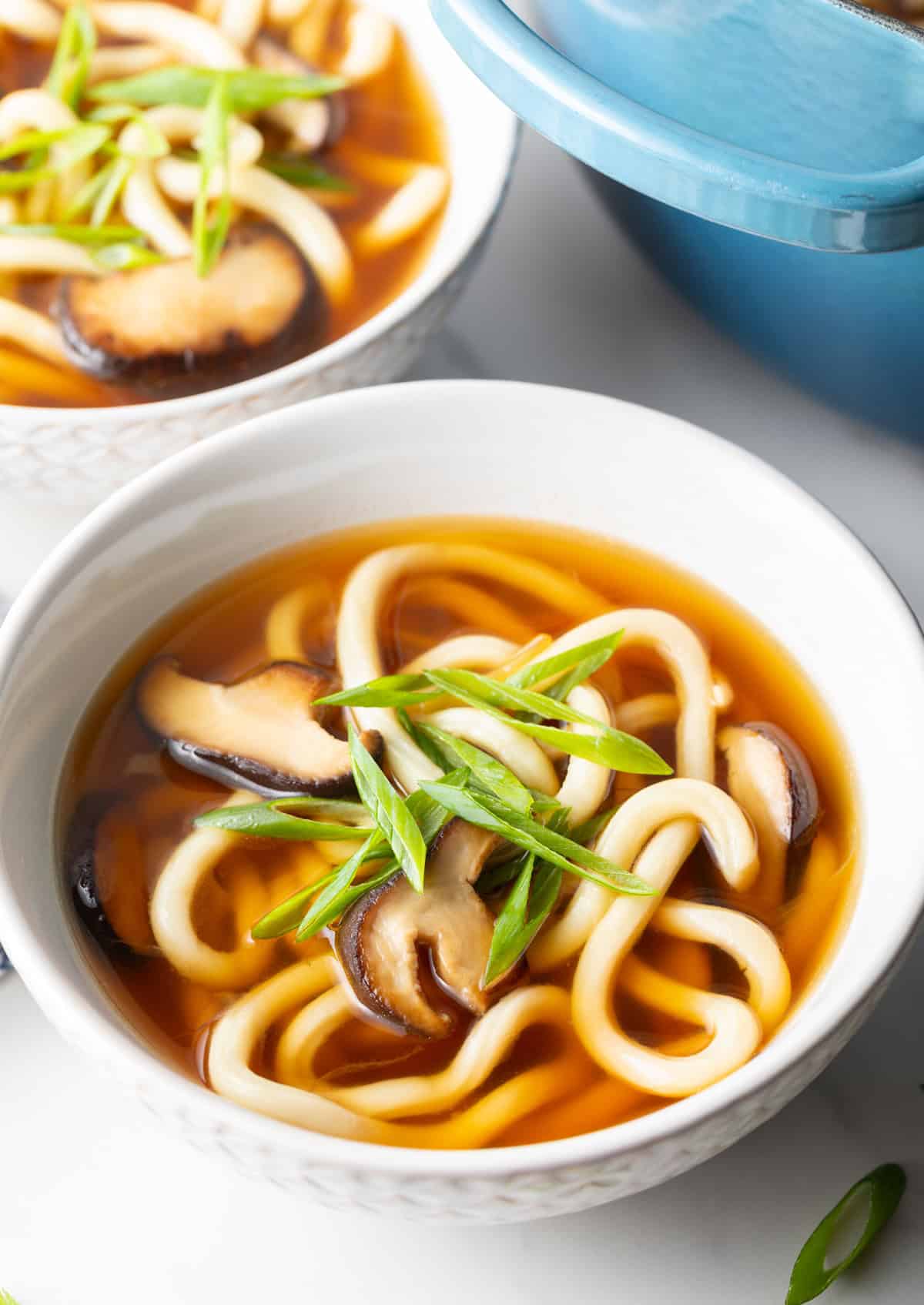
My thick, chewy, and slurpable udon noodles with mushrooms in a savory broth is a fantastic combination of textures and flavors that satisfy, without feeling heavy. My simple udon soup recipe is easy to make in under 30 minutes and is a perfect quick dinner for whenever you’re craving something equally light and delicious.
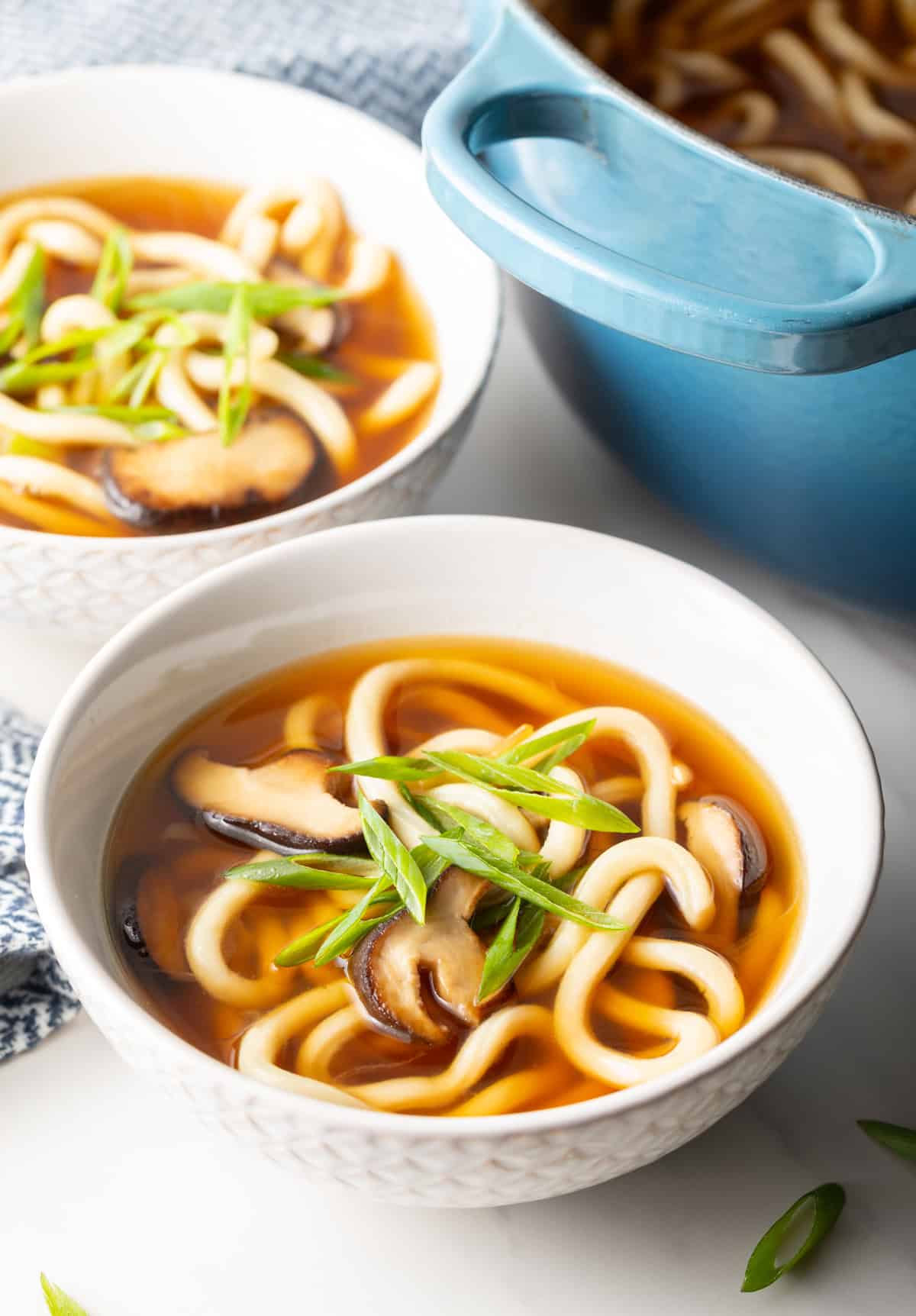
You might have noticed that I love comfort foods that are rich, stick-to-your-ribs, and tend to lean on the heavier side. But there is this thing called balance (allegedly) that makes me also crave and enjoy plenty of healthier foods, like fresh salads and simple soups. My clear soup recipe is perfect to start a light meal; however, for a filling but not too filling main entree, there’s nothing more satisfying than a hot bowl of soup loaded with oodles of tasty noodles. And there’s no noodle more tantalizing than thick udon noodles with an unctuous texture. Today I’m sharing a super easy udon soup recipe that can be served as-is for a simple comforting meal, or doctored with all sorts of toppings and protein options. Either way, this fabulously simple dish is a delight at the dinner table.
Table of contents

Sommer’s Recipe Highlights
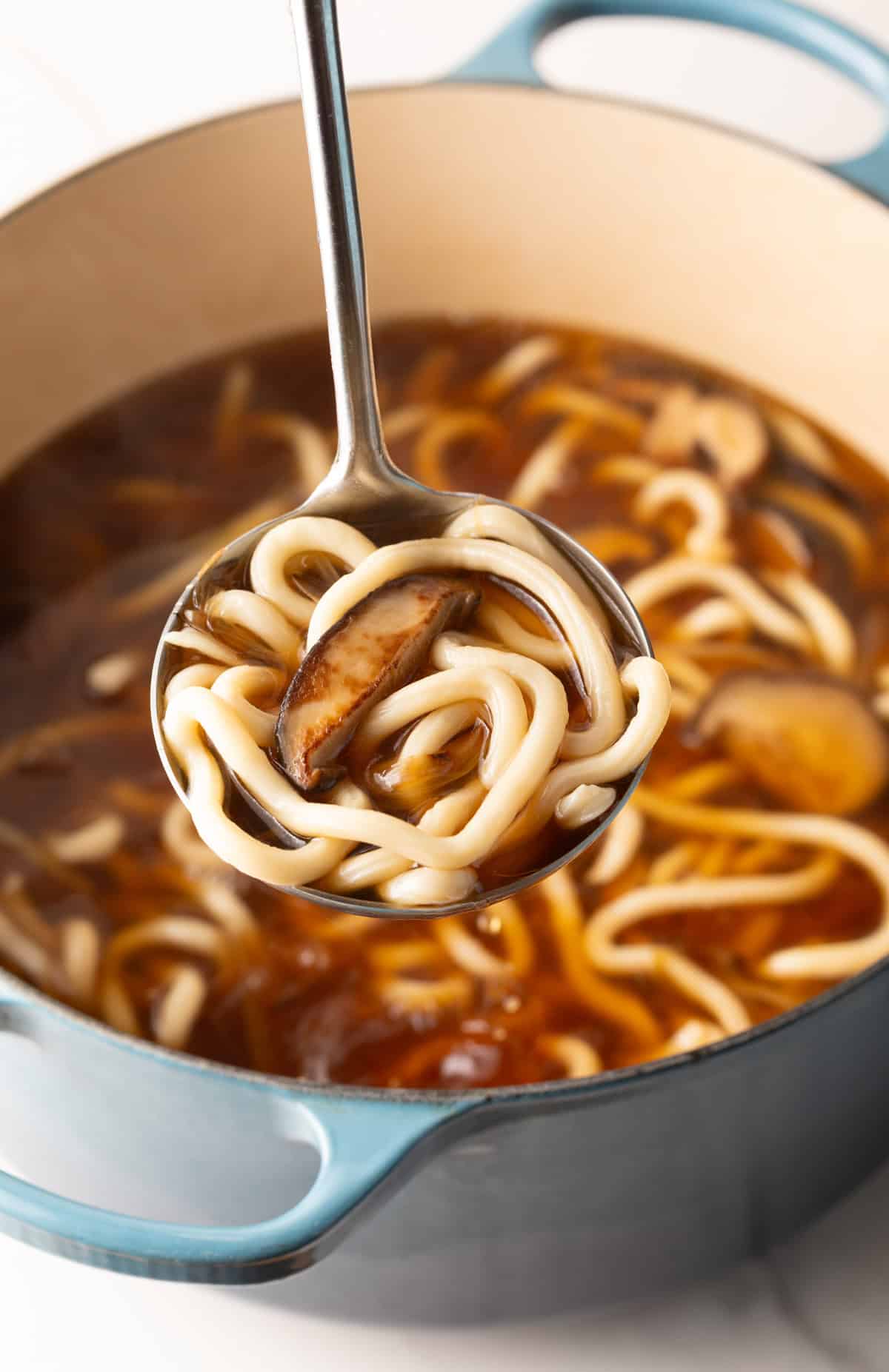
Amazing Flavors & Textures – Just because I want a light and healthy soup doesn’t mean I want a lackluster soup. (Does anybody ever want that?) This udon soup recipe has a delicate broth, but the addition of tender, savory mushrooms and thick, lightly soft and chewy noodles makes a wonderfully cozy and enticing combination.
Customizable Clear Soup – Start with my base soup recipe, then do it up your way with different veggies, seasonings, and crunchy goodies to adjust the taste and textures. You can even make an easy chicken udon soup or fill your bowl with fish cakes and tofu to pack in additional protein and deliciousness!
Dinner in Under 30 – I keep prep to a minimum here with just some quick slicing, and everything cooks in one pot, easy-peasy. Use precooked noodles, and you’ll have the perfect udon noodle soup to slurp up in less than 30 minutes.

Key Ingredients and Tips
- Udon noodles – These traditional thick Japanese noodles are made from wheat flour, giving them a soft, irresistibly chewy texture. They’re mild in flavor and perfect for soaking up broth! The noodles come either in a dried form or in partially-cooked vacuum-sealed pouches. I prefer vacuum-sealed pouches because the noodles are ready in just 1 or 2 minutes.
- Shiitake mushrooms – If you are tempted to use a different type of mushroom, I’m gonna go ahead and stop you right there. Shiitake mushrooms really are the absolute best to use in this udon soup recipe, as they have a unique, meaty flavor that you simply can’t find in other varieties.
- Green onions – I include both the whites and green parts, so pick a bunch of scallions that is very fresh and crisp.
- Soy sauce – I use the full-strength stuff, but you can use low-sodium if you prefer.
- Sesame oil – I always stick with sesame oil whenever it’s called for in a recipe, because, really, there is no other oil with a higher smoke point and such a pleasantly mild flavor. Sure, you can swap it out with avocado oil or canola oil, but they don’t have the same smooth, nutty taste that complements the soy sauce and dashi.
- Mirin – This sweet Japanese rice wine is sold at most big grocery store chains. If you cannot find it, you can substitute it with a sweet white wine. Or white grape juice is a great nonalcoholic substitute for mirin. (Although to note: this recipe uses only 1/4 cup and the alcohol cooks out, so no, you can’t get buzzed from the soup.)
- Dashi powder – a traditional Asian soup base that is made with shrimp flakes, seaweed, and dry mushrooms. It has a very distinct flavor, so try to find it if you can; it’s usually readily available at Asian markets in America. You can always order it on Amazon if needed. But if you cannot get your hands on Dashi powder, I would substitute mushroom powder instead.
How to Make
Find the full ingredient proportions, detailed instructions, storage tips, and a video tutorial in the printable form at the bottom of the post.
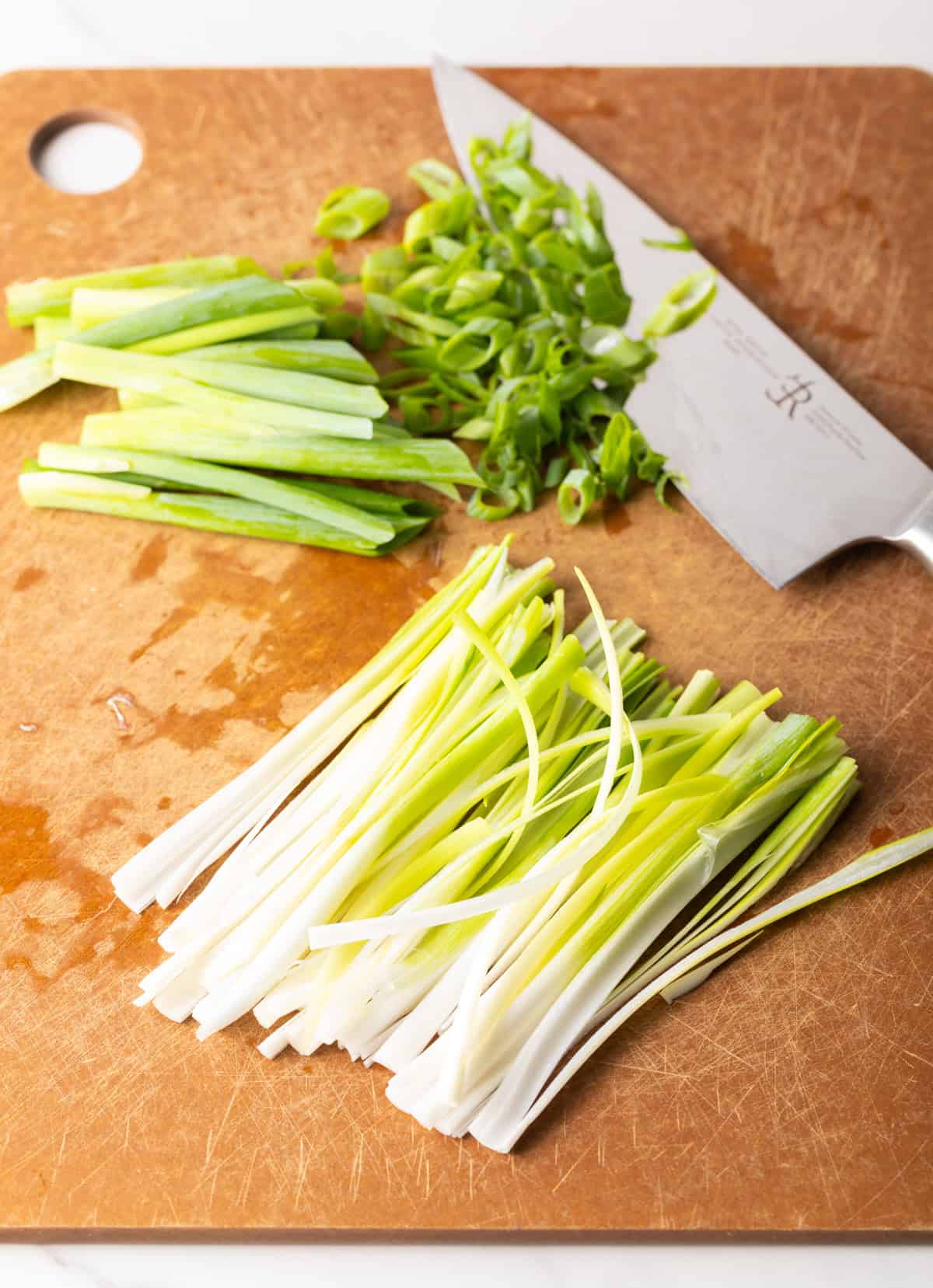
Prep the Veggies – This takes less than 10 minutes and requires mostly just a bit of thoughtful slicing. I start with the green onions by cutting off the root ends, then slice the scallions in half, separating the white parts from the green. I split the white ends lengthwise, then cut each piece into quarters so they turn into long, noodle-like strips, like in the photo below. (These sections will go into the soup as it cooks.) I thinly slice the green ends and save those to sprinkle on top of the soup later for a fresh garnish. Then the mushrooms are finely sliced, and we’re ready to go!
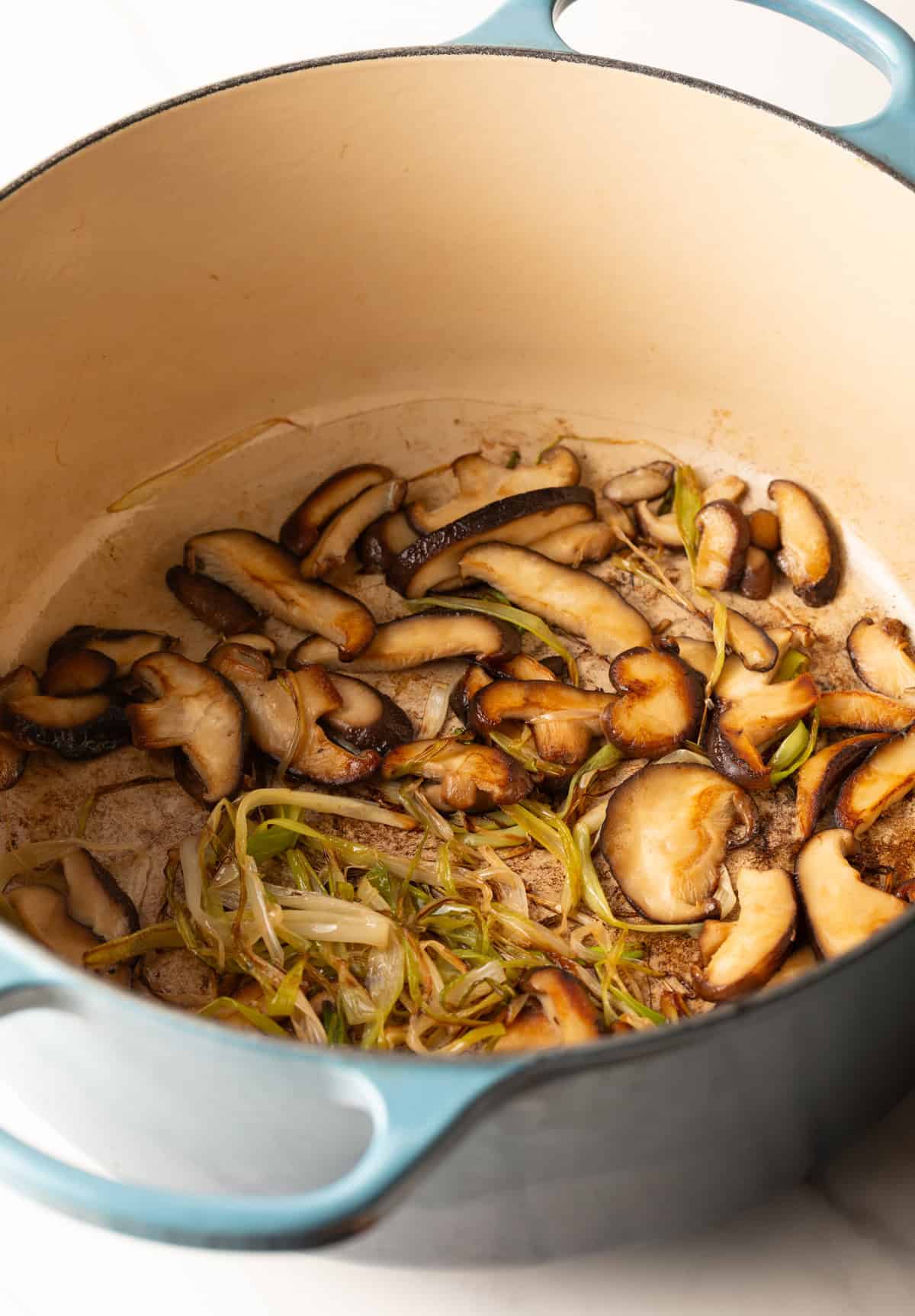
Stir-Fry – I then get out my large soup pot that has a 6-8-quart capacity. I set it over medium-high heat, then add the sesame oil to the cold pot. Once that heats up, in go the white pieces of the scallions and sliced mushrooms. They are going to smell amazing as soon as they hit the pot!
I stir-fry the veggies for only a few minutes, until the onions are soft. Keep things moving so the mushrooms and onions don’t burn.
Add the Soup Base – Now I pour in the water, soy sauce, mirin, and dashi powder. Give it a stir and turn up the heat ever so slightly, until the soup starts to bubble. You might need to adjust the temp up or down depending on your stove to get the liquid to a simmer. I cook the soup for at least 5 minutes to get the most intensely flavorful broth.
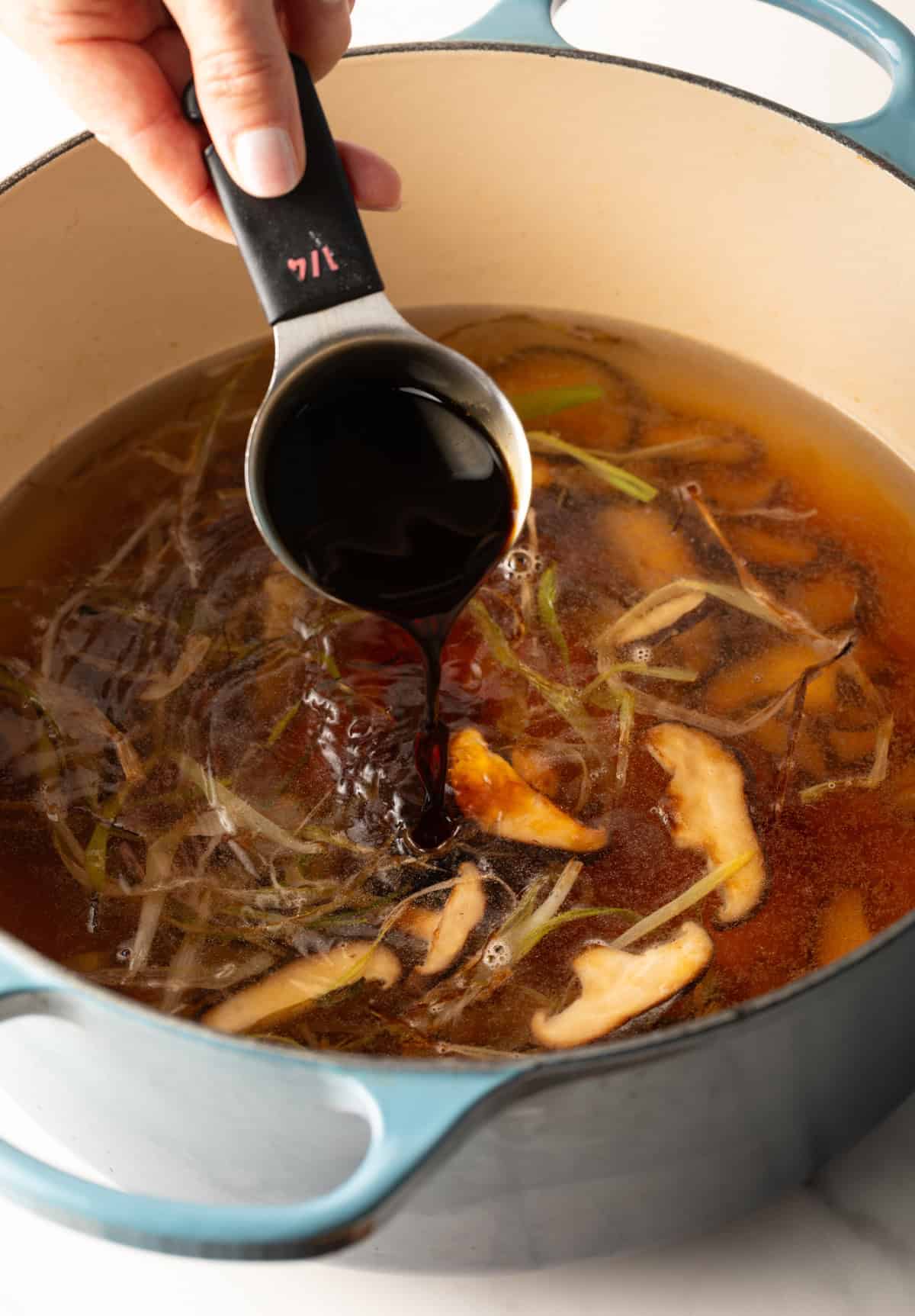
Noodle Time – After several minutes, I carefully squeeze the thick udon noodles from the package and into the soup, letting them gently plop in as one clump. I only stir the noodles a bit to loosen them, but mostly let them separate naturally in the broth. I’ve learned that messing with udon noodles too much can cause them to be gummy, so it’s best to give them some space to do their thing!
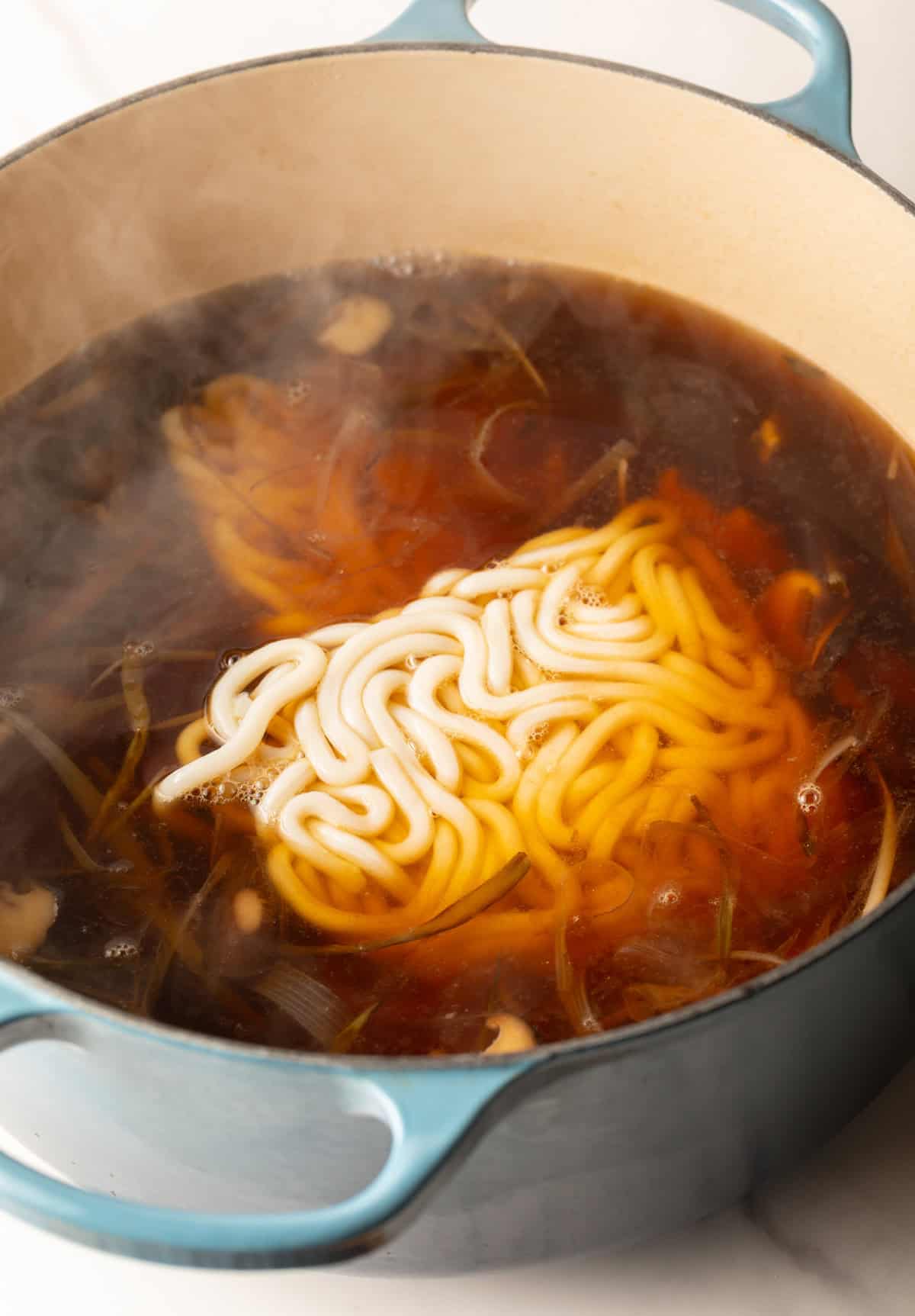
Simmer then Slurp – Because udon noodles are already mostly cooked before being packaged, they only need to simmer for about 2 minutes to heat thoroughly. At the 90-second mark, I fish out a noodle, take a bite to see if it’s hot, and either continue cooking for a few more seconds or pull the pot off the heat if they’re good to go.

Optional Add-ins
I typically make udon noodle soup as a light meal that’s still all kinds of warm and cozy. When I need a ‘lil pop of pizzaz with my comfort soups, sometimes I’ll throw in crunchy mung bean sprouts and fresh herbs like Thai basil or cilantro, plus a punch of spicy chili paste and a sprinkle of crispy fried onions for fun.
For a heartier dinner that’s still keeping things on the healthy side, consider adding in proteins like fish cakes, cubes of firm tofu, jiggly soft-boiled ramen eggs, or sliced leftover cooked chicken or pork. But like a traditional hot pot recipe, you can even cook thinly sliced pieces of raw meat right in the simmering udon broth if you don’t have leftover chicken or pork on hand!
Serving Suggestions
If you give Sommer a soup, she’ll surely ask for a salad. (And then a cookie, but I’ll save that for another post…) I usually serve udon soup alongside a simple chopped romaine lettuce salad with my favorite peppy ginger carrot dressing.
The soup can also be served as a more substantial first course before enjoying main dishes. It’s a delicious way to kick off a dinner of shrimp fried rice or meaty beef ribs, or any of your favorite Asian cuisine-inspired foods.

Storage and Reheating
Unlike a lot of soups that tend to get tastier as they *marinate* in the fridge, udon noodle soup is best enjoyed fresh. However, leftovers store well with a little TLC! Let the soup cool, then transfer it to airtight containers and refrigerate for up to 3–4 days. If possible, store the noodles separately from the broth – udon noodles soak up liquid quickly and can become a bit too soft/mushy if left together.
To reheat, warm the broth on the stovetop or in the microwave until hot but not boiling. Add the noodles to the hot broth and cook for 1 more minute, just until warmed through. If using the microwave, heat in 1-minute intervals, stirring between each.
Frequently Asked Questions
No, this is not a vegetarian recipe as it is made with traditional dashi, which includes bonito flakes AKA fish flakes. You can find fish-free dashi powders online; however, to make the udon soup vegetarian-friendly.
A splash of soy sauce or an extra dash of dashi goes a long way. Taste as you go and adjust to your preference!
Absolutely, just prepare them according to the package directions before adding them to the soup near the end of cooking.
More Soup Recipes





Easy Udon Soup Recipe
Video

Ingredients
- 1 tablespoon sesame oil
- 1 bunch green onions divided
- 5-6 ounces shiitake mushrooms sliced
- 10 cups water
- 6 tablespoons soy sauce
- 4 tablespoon mirin
- 2 tablespoons dashi powder bonito soup stock
- 14.2 ounces vacuum-sealed udon noodles 2 packages
Instructions
- Soup Prep: Lay the bunch of scallions on the cutting board. Cut off the root ends, then cut them in half, separating the white ends from the green ends. For the white ends, cut them in half, lengthwise, and then cut each half into quarters, creating long noodle-like segments of scallion. For the green ends, slice them thin to use later as a fresh soup topping. Finely slice the shiitake mushrooms.
- Set a large 6-8 quart soup pot over medium-high heat. Add the sesame oil to the pot. Once hot, add the scallion whites and shiitake mushrooms. Stir fry the veggies for 3-5 minutes until the onions are soft.
- Pour the water into the soup pot. Then add the soy sauce, Mirin, and Dashi powder. Stir well and bring to a simmer. Simmer the soup base for at least 5 minutes.
- Cut the udon noodle packages open. Squeeze the noodles out of the packages into the soup broth. Stir gently to loosen the noodles; do not try to break them apart, allow the gentle movement of a liquid to separate them. Once the noodles are fully separated, simmer for another 1-2 minutes. Then turn off the heat.
- Scoop the noodles and broth into bowls and sprinkle with fresh green onions. Top with any other additional ingredients you like!


Such a cozy, easy meal! The broth was delicious and the udon noodles were perfectly tender. This is going into our regular rotation.
Simple ingredients, amazing flavor. I loved how fast this came together and it was incredibly satisfying.
This udon soup is perfect for busy nights! It was quick, comforting, and tasted like something from my favorite restaurant.