

Turkish Delight Recipe
 by Sommer Collier — last updated on Aug 28, 2026
I’ve learned that the secret to great homemade Turkish Delight is getting that signature texture just right… Soft and tender with just the right amount of chew. My easy Lokum recipe shows you how to make this classic sweet candy at home with rosewater and nuts, plus I’ve included my favorite ways to customize it with different flavors. Once you know my simple method, it’s much easier to make than you might think!
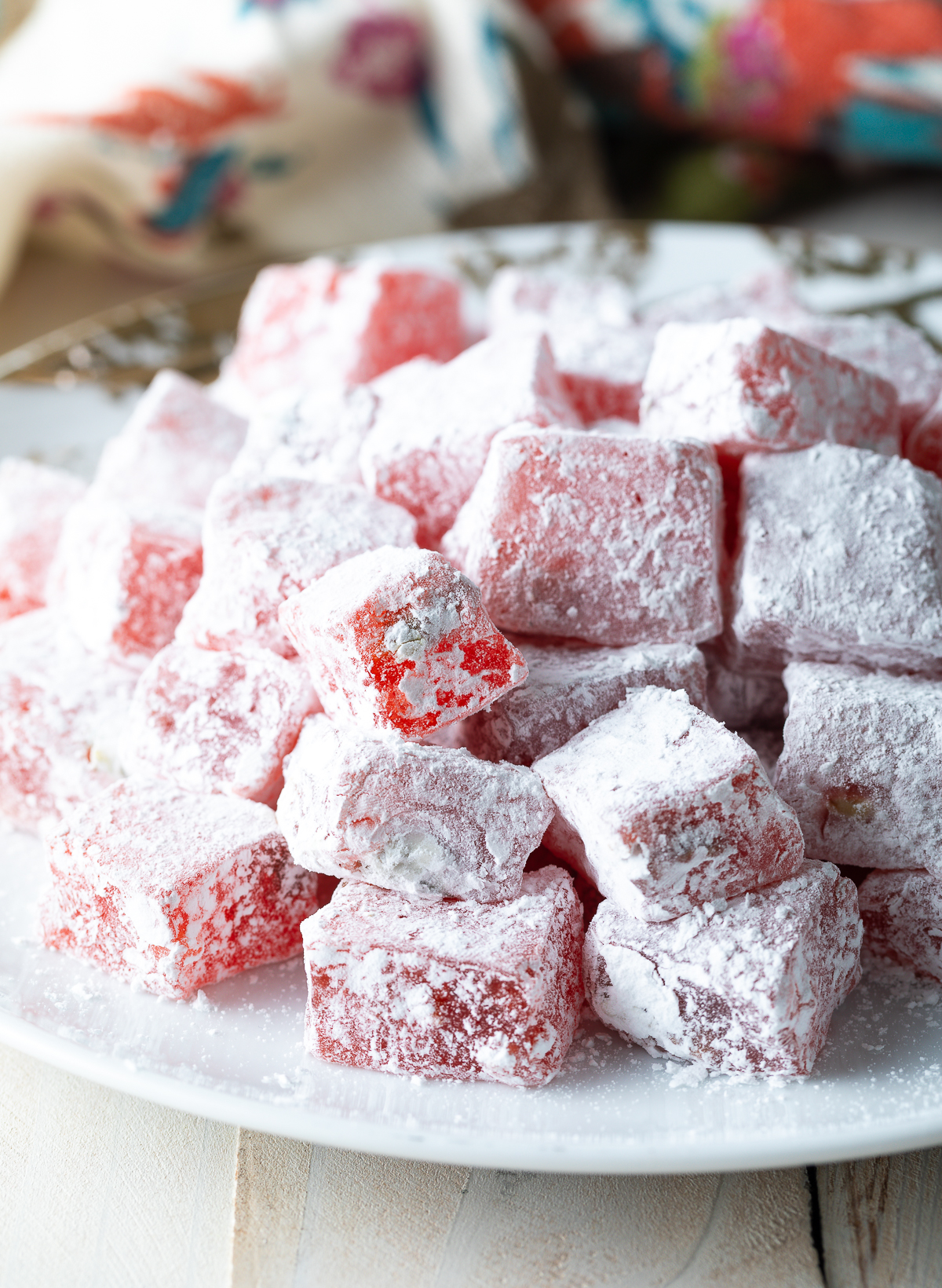
Aren’t there some books you just never get tired of reading? Especially during the winter season, or stressful times, some stories are tried-and-true comforters. For my family, the Chronicles of Narnia is a classic collection that we often read together. My kids love the books so much, I have probably read them through a dozen times over the years. Every time we read them, I feel the need to run out and buy Turkish Delight. If you don’t remember, these candies are firm jelly-ish squares featured in the books as the ultimate temptation for young Edmund. After several trials and comparisons, we’ve discovered homemade Turkish Delight tastes significantly better than the store-bought version. Plus, you can use various extracts to make nearly any flavor you like!
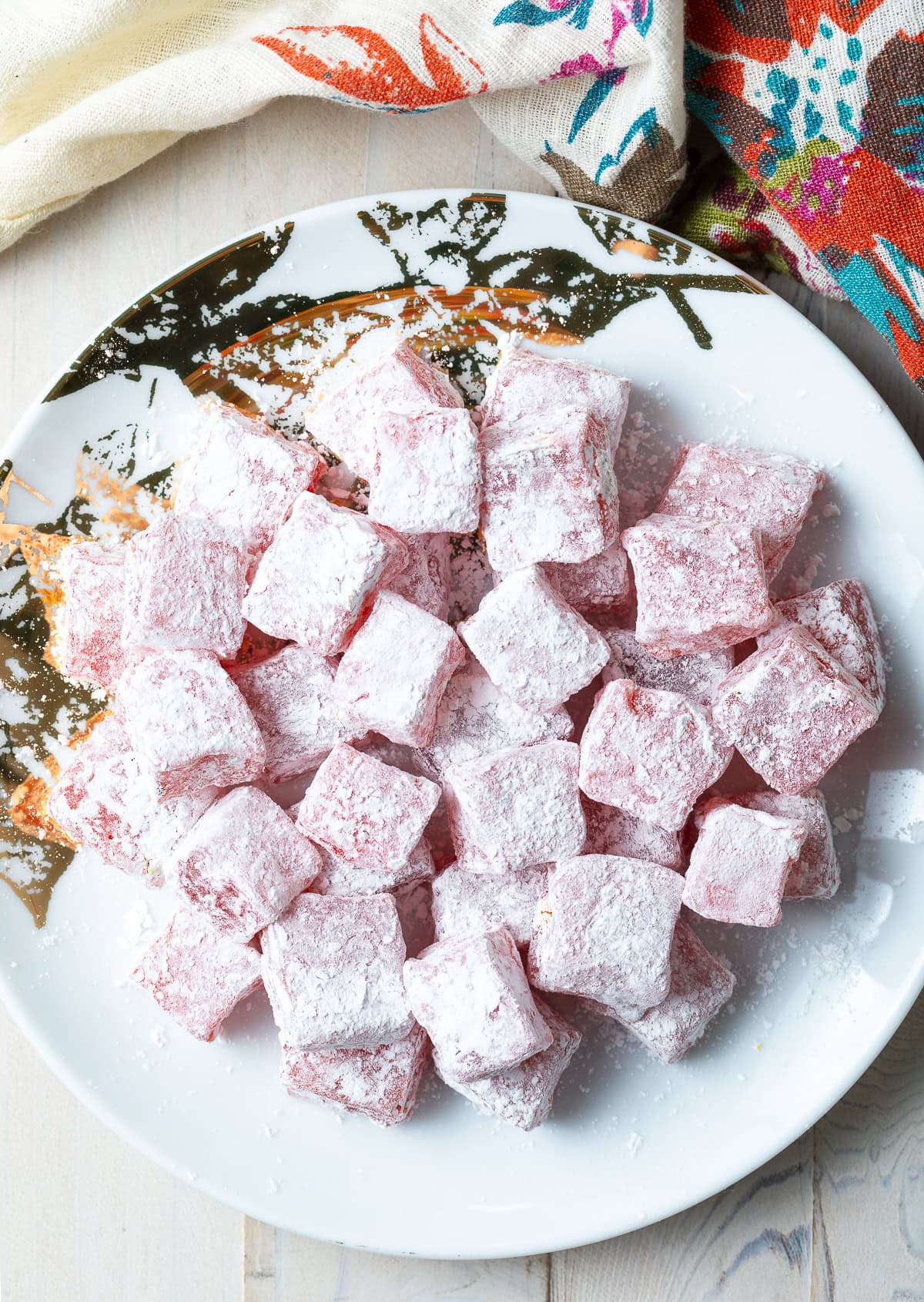
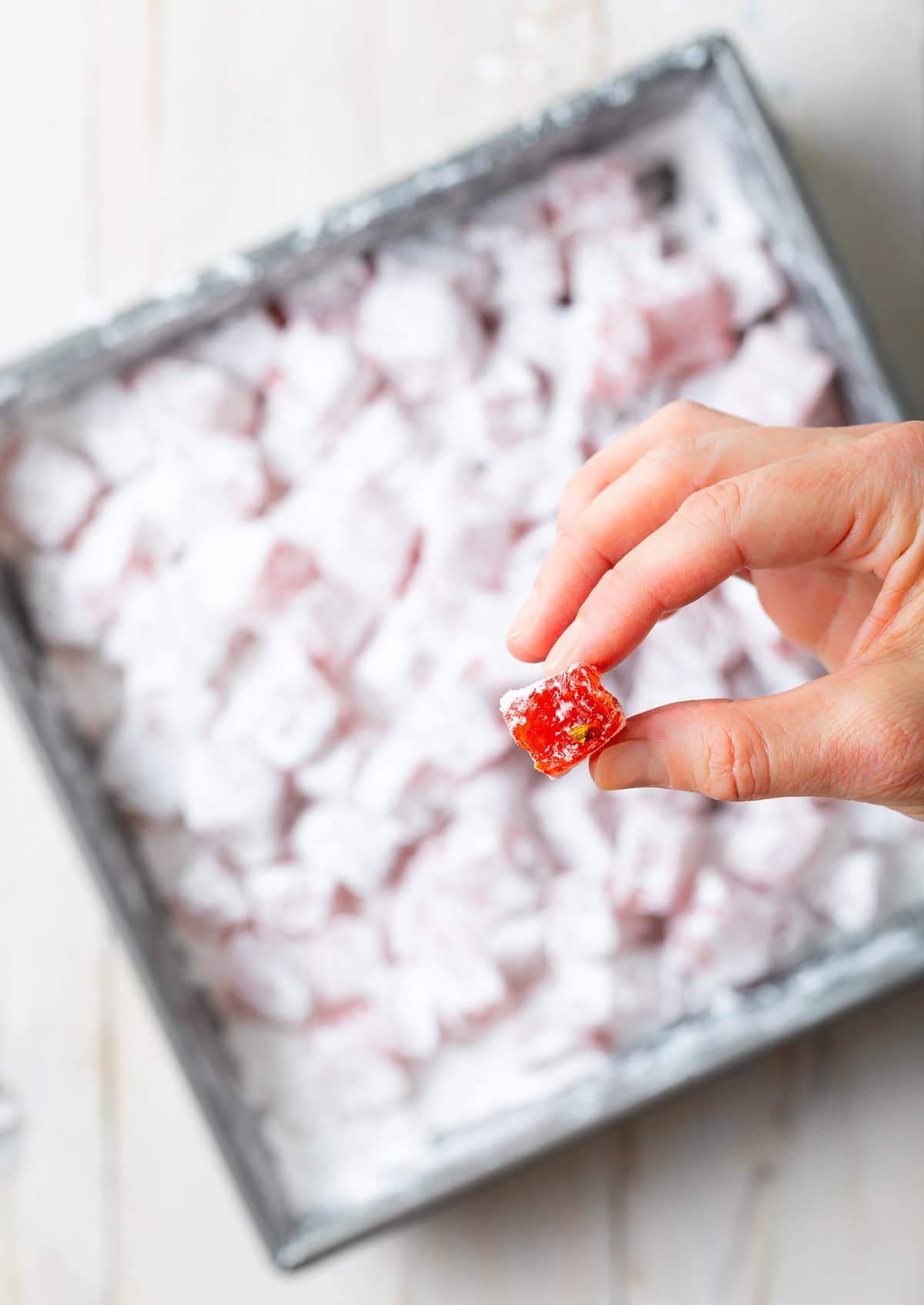
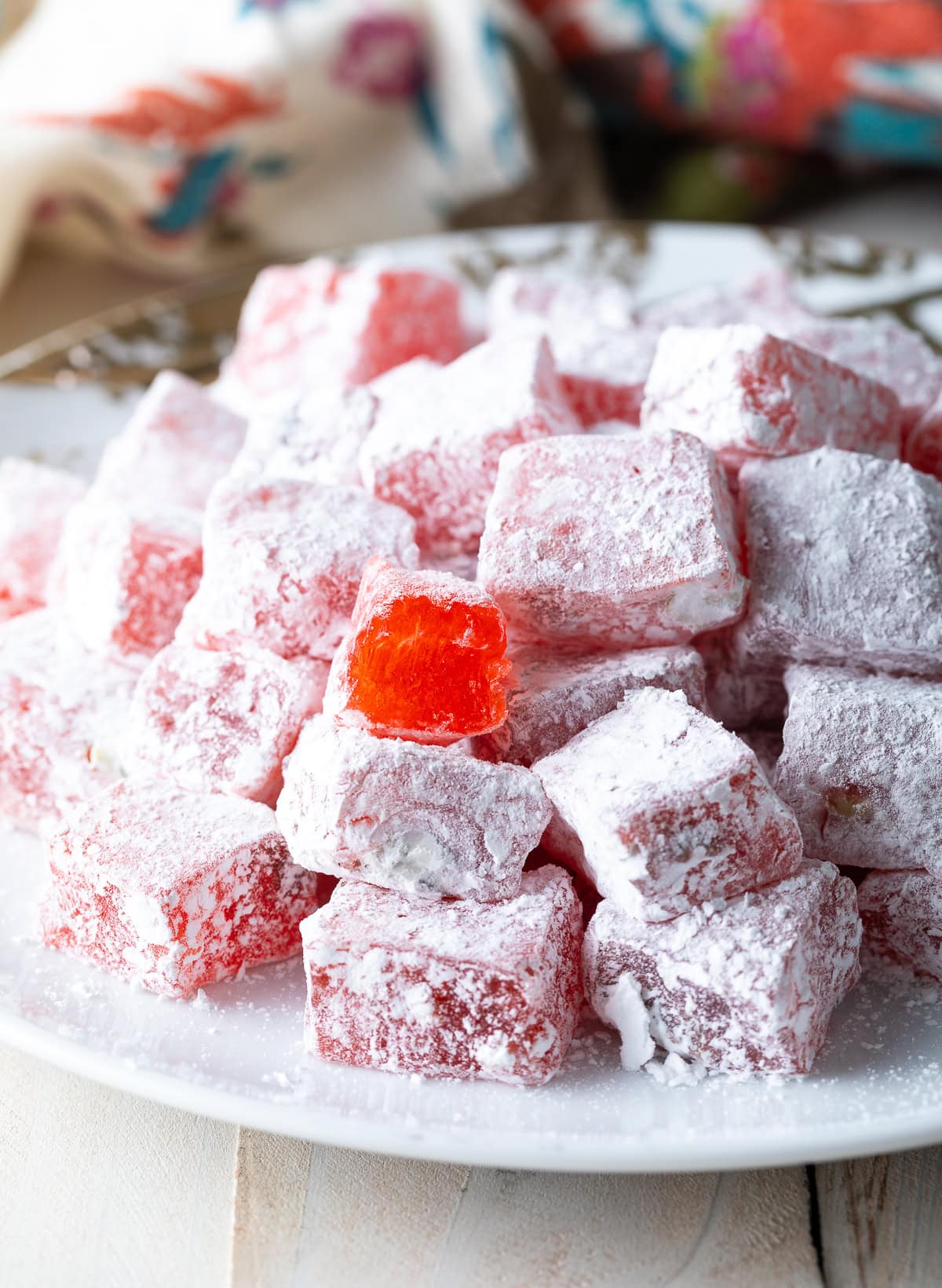
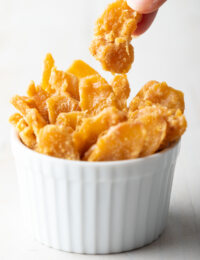
What is Turkish Delight? Also known as Lokum, Turkish Delight candy has the soft squishy texture of gum drops, is typically speckled with chopped pistachios on the inside, and is generously coated with powdered sugar on the outside. This confection was known to be created as early as the 18th century in Turkey and Iran (Persia). The most traditional flavor for homemade lokum is rosewater. However, in this Turkish Delight recipe I’ve blended rosewater, orange, and raspberry. The rosewater is present but not quite as strong as the classic candy, and I find the orange and raspberry combination to be wonderfully bright and fruity together. Also check out my candied orange peel recipe!
Justin – ⭐⭐⭐⭐⭐ Cooked on an electric top. turned out perfect. but I lowered the heat during the 45min simmer to a 3 and stirred almost constantly letting it rest for no more than 35 seconds. still had some burned sugar on the bottom but it didn’t affect taste. if I had lowered it to a 3 starting off I might have avoided burning altogether. still tasted amazing tho and this is a 5 star recipe for sure. use another person for sure tho.
Table of Contents

Sommer’s Recipe Highlights
Customizable – While many of these ingredients below are optional, including the rosewater, pistachios, and food coloring, I love incorporating all of these elements for making absolutely the tastiest and prettiest Turkish Delight squares. You can certainly skip the nuts for a uniform texture in each bite or if you have allergy concerns. Feel free to try different extracts and additional goodies to create your own unique Lokum flavors!
Perfect for Gifting – Like my divinity candy recipe, these little treats make the perfect edible gift for holidays and special occasions.
Key Ingredients and Tips
- Granulated sugar – This creates the sweet, candy-like base of my Turkish Delight. Since sugar is the star here, I make sure to measure it accurately for the right texture.
- Lemon juice – A little fresh lemon juice adds brightness and helps balance all that sweetness.
- Cornstarch – This is what gives Turkish Delight its signature soft, slightly chewy texture. Make sure to whisk it thoroughly so there are no lumps.
- Cream of tartar – I add a little cream of tartar to help create a smooth, stable candy mixture and prevent the sugar from crystallizing.
- Rosewater – Rosewater gives my Turkish Delight that classic delicate floral flavor. A little goes a long way, so I measure carefully… You want floral, not perfume!
- Orange extract – I love adding orange extract for a bright citrusy variation that pairs beautifully with the sweet candy base.
- Raspberry extract – Raspberry extract adds a fun, fruity flavor and works especially well with the traditional pink color.
- Pistachios – I add pistachios for their rich, nutty flavor and wonderful little bits of crunch throughout the soft candy. You can leave them out for a completely smooth version.
- Powdered sugar – I generously coat the finished Turkish Delight in powdered sugar to keep the pieces from sticking together and give them that classic snowy finish.
- Red food coloring – I use just a few drops to create that beautiful rosy pink color. Start small, you can always add another drop until you reach the shade you want.
How to Make
Find the full recipe with ingredient proportions, detailed instructions, and a video tutorial in the printable form at the bottom of the post.
First, I prepare a workspace. I set two large 4-6 quart stock pots on the stovetop, and attach a candy thermometer onto one of the pots. Then I set out a 9X9 inch baking dish. I line it neatly with foil and spray it generously with nonstick cooking spray. Set aside.
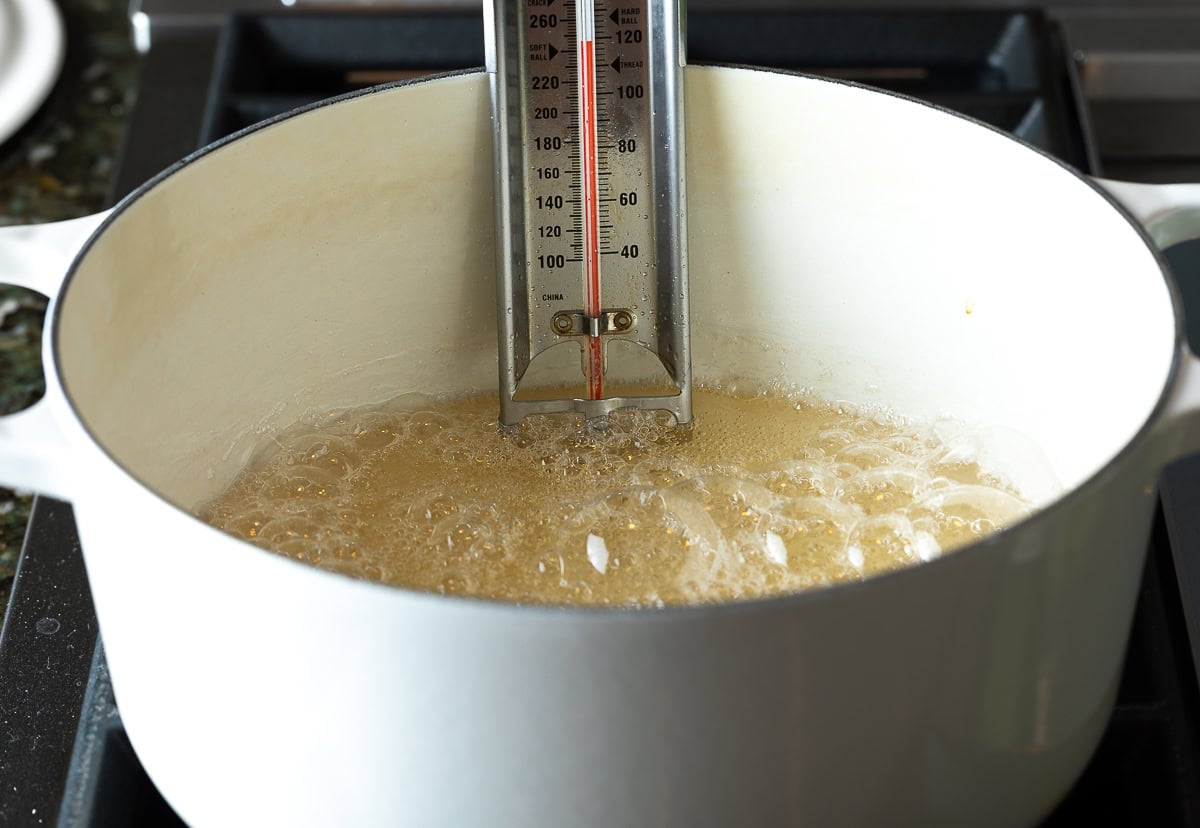
Into the pot with the thermometer, pour 4 cups of sugar and 1 ½ cups of water. I set on high heat and bring to a boil. Continue to boil until the sugar syrup reaches 240 degrees F.
Meanwhile, I pour the remaining 2 ¾ cups of water in the second pot. I whisk in the lemon juice, cornstarch, and cream of tartar, making sure there are no clumps/lumps. Then I turn the heat on high and continue whisking until the cornstarch mixture forms a thick white paste that resembles petroleum jelly. Make sure there are NO clumps.
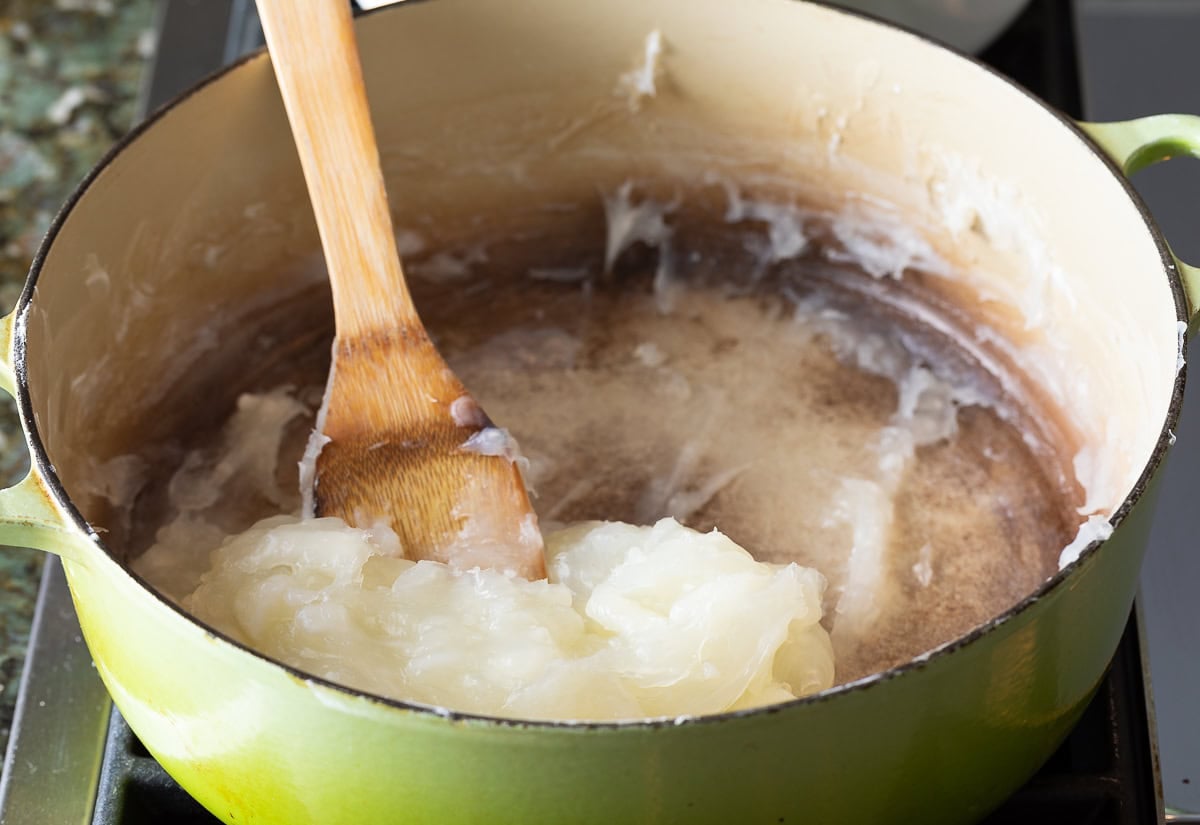
Once the sugar syrup reaches the desired temperature, I slowly and carefully pour the hot syrup into the cornstarch paste, a little at a time, making sure there are NO clumps. (This is safest with two sets of hands.) Turn the heat back to medium and simmer, stirring occasionally, until the mixture looks like thick golden-orange jelly.
Again, NO CLUMPS! It’s highly important that you whisk the Turkish Delight mixture well, at every step, to ensure there are no clumps of cornstarch left in the mixture. These little bits of cornstarch will turn hard like little rocks in each piece of candy.
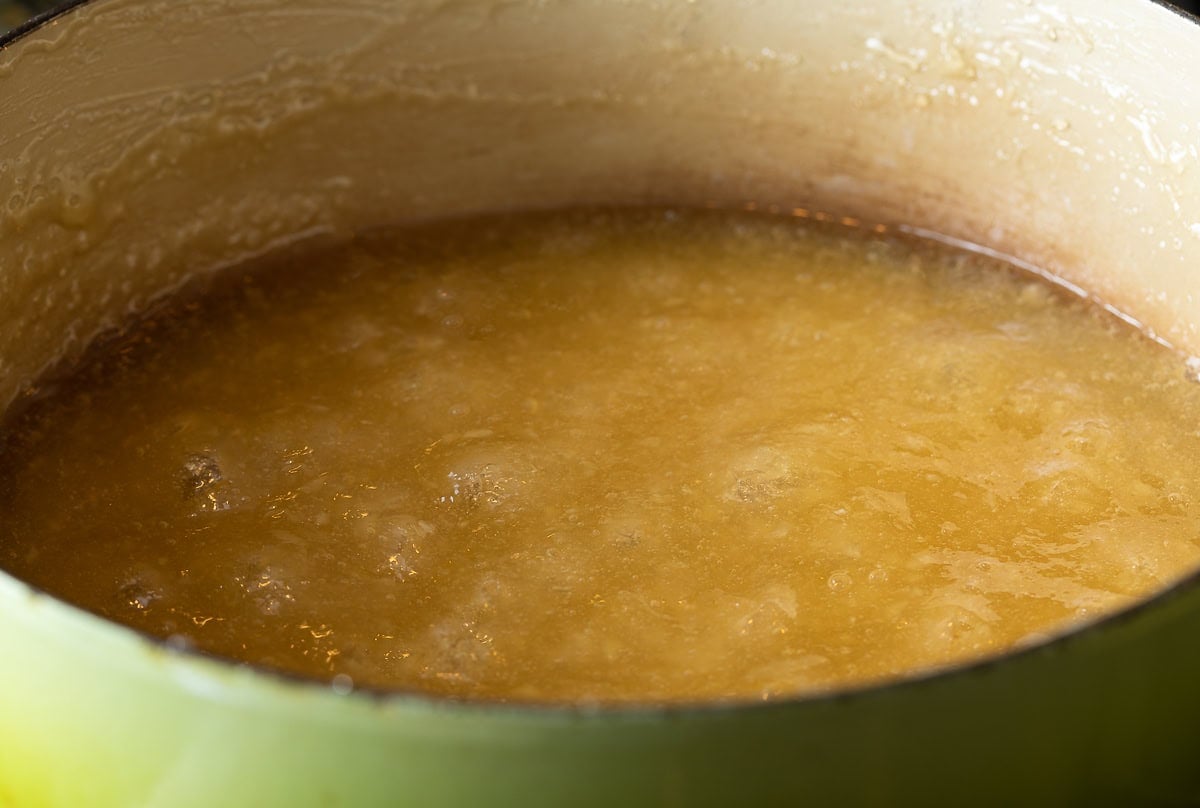
I turn off the heat, stir in the rosewater, raspberry extract, orange extract, and salt. This is when you should add the food coloring if desired.
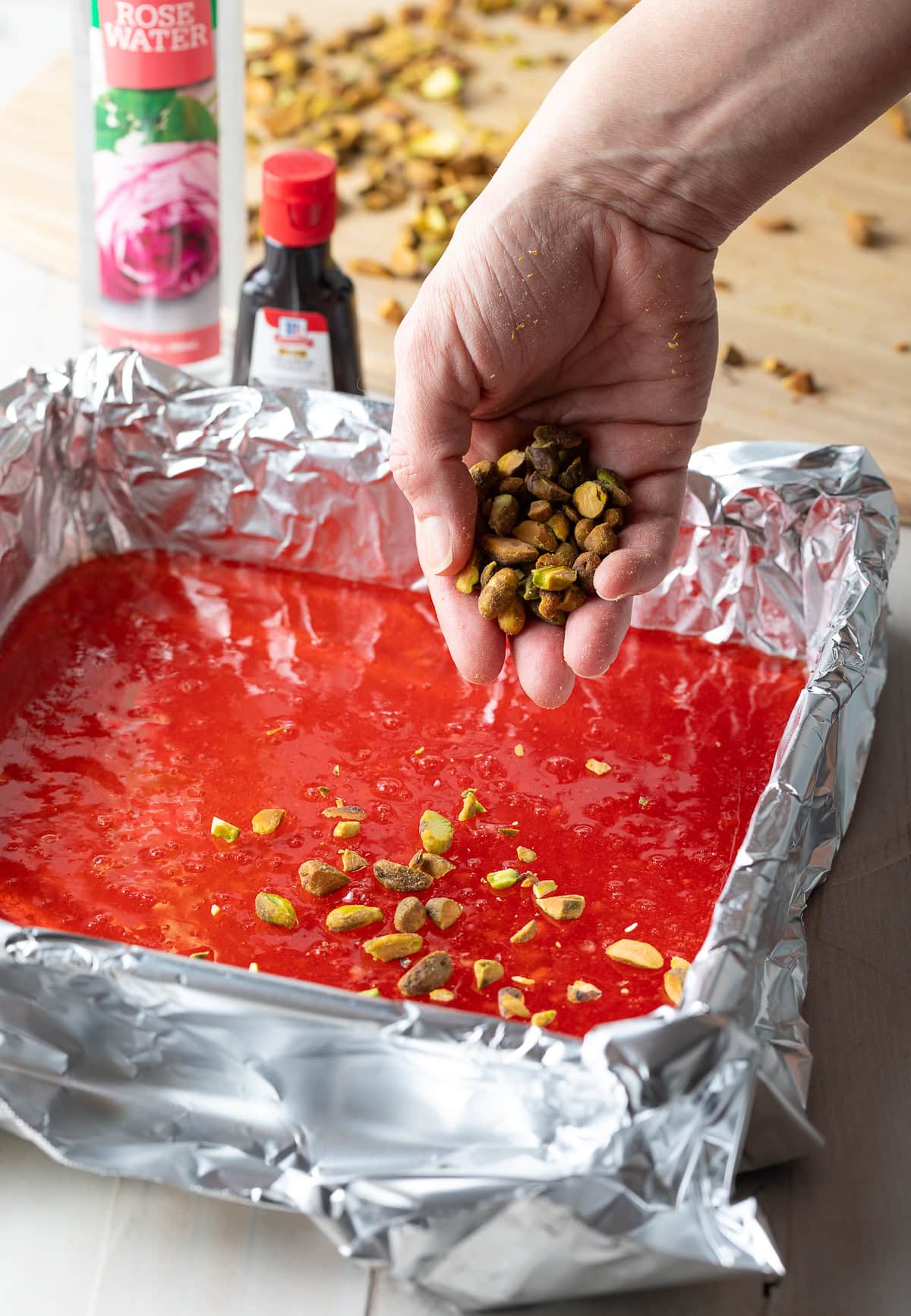
I pour half of the mixture into the prepared baking dish, and quickly sprinkle with chopped pistachios. Then pour the remaining candy mixture over the top before it cools and becomes too thick to pour.
Pro Tip: Two sets of hands in nice here as well. If you don’t care that the pistachios are directly in the center of the candy, you can simply mix them into the candy mixture and pour it in the pan all at once.
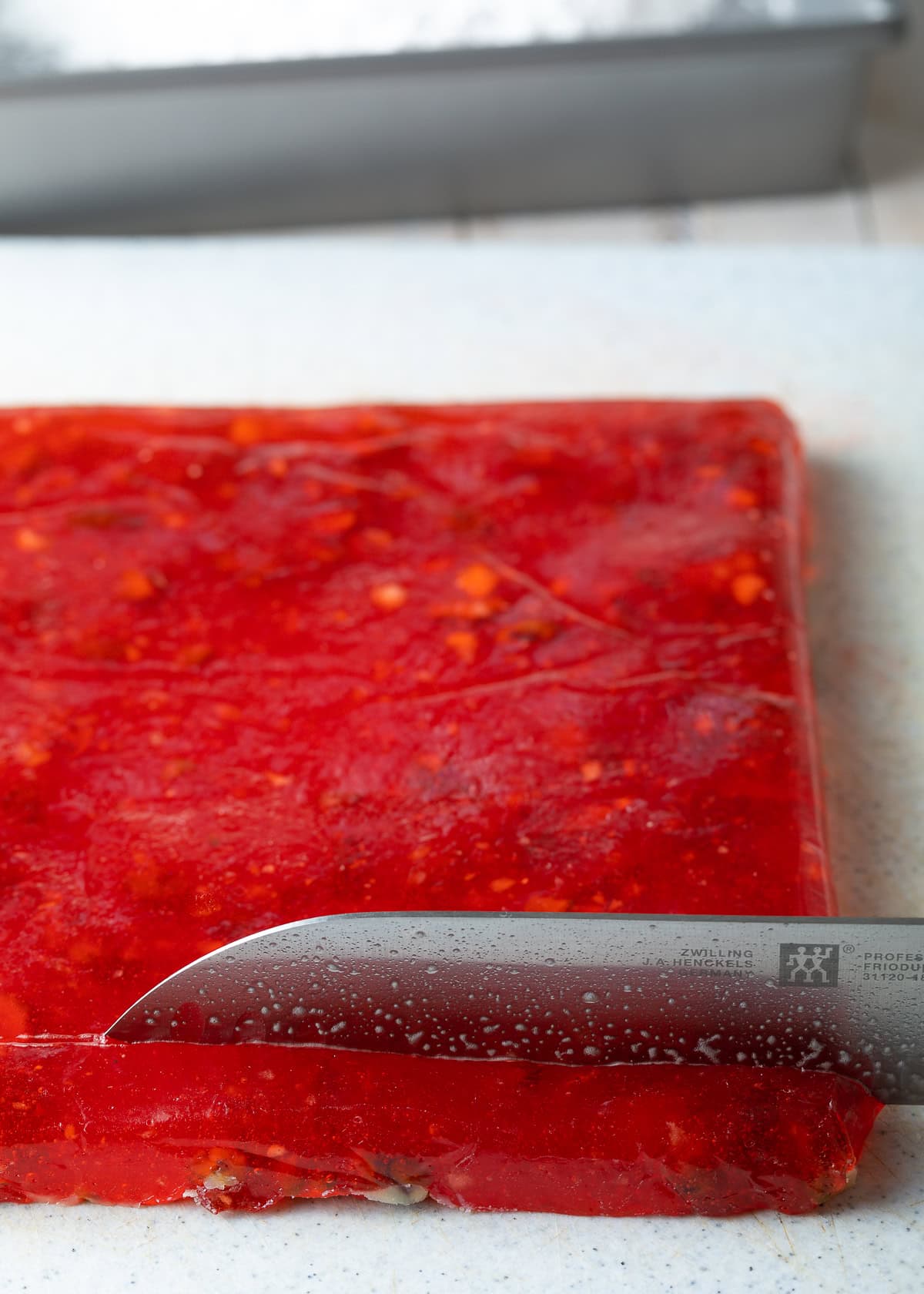
Place the dish in the refrigerator and chill until firm. Once it has become solid, turn the Turkish Delight out of the dish onto a cutting board, and peel off the foil. Use a sharp knife to cut the candy into approximately 100 tiny squares.
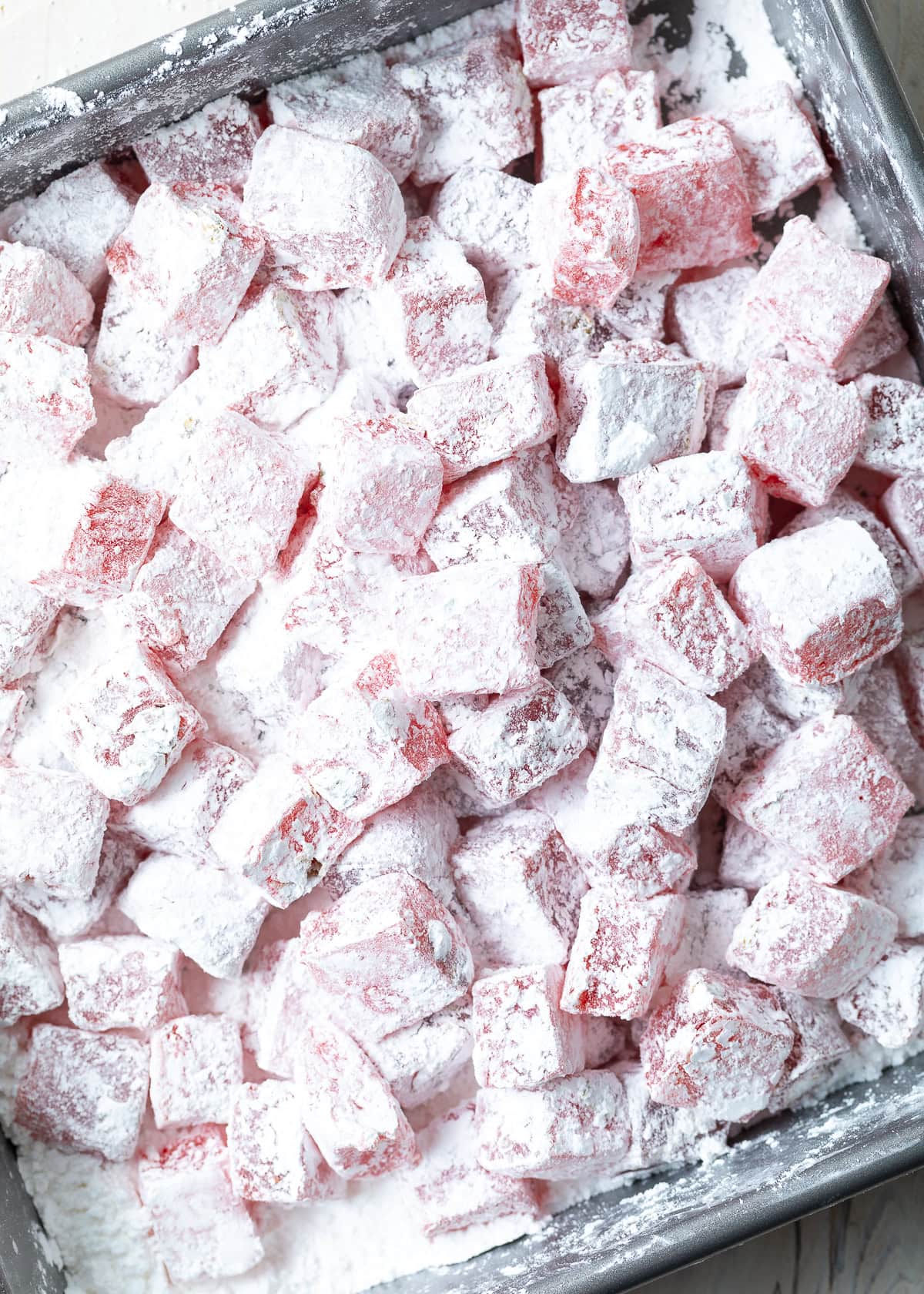
Add powdered sugar to the empty baking dish. As you cut the homemade Lokum pieces, give them a good shake in the powdered sugar to coat on all sides.
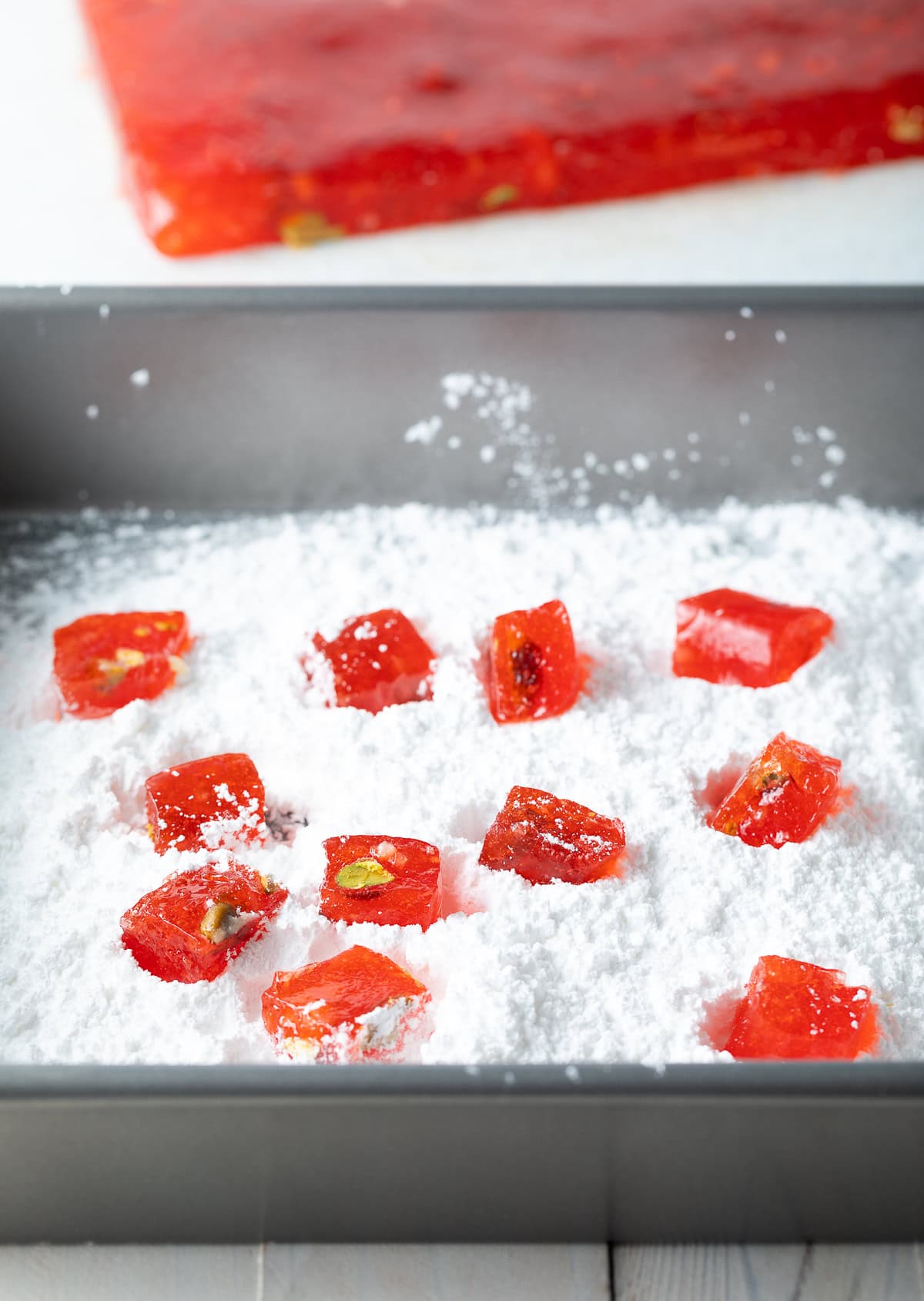
The candy should be somewhat hard after chilling, but will soften as it sits at room temperature.
Move the coated Turkish Delight to an airtight container, and keep it at room temperature for up to 4 weeks.
I hope your family enjoys the sweet, fruity, classic candies as much as we do!
Expert Tips
Use a candy thermometer – This is one recipe where I don’t recommend eyeballing the temperature. I cook the sugar syrup until it reaches exactly 240°F, which is the soft-ball stage. The correct temperature is important for getting that soft, chewy Lokum texture rather than candy that’s too loose or too firm.
Absolutely no cornstarch lumps! – This is probably my most important tip. I whisk the cornstarch mixture extremely well before and during cooking until it is completely smooth. Any little lumps that remain can turn into unpleasant hard bits in the finished Turkish Delight, so take your time with this step.
Enlist a helper – I’ve found this recipe is much easier with two sets of hands, particularly when it’s time to slowly pour the extremely hot sugar syrup into the thick cornstarch mixture. One person can pour while the other continuously whisks. It’s easier, smoother, and safer.
Look for visual cues, not just the clock – The 45-minute simmer is a good guideline, but stovetops and cookware vary. I’m ultimately looking for the mixture to become very thick, glossy, and golden-orange with a jelly-like consistency. That’s a better indication that it’s ready than the timer alone.
Have everything ready before you start – Once the candy reaches the proper consistency, things move quickly! I have my prepared pan, extracts, food coloring, and chopped pistachios measured and within reach before I start cooking. The mixture becomes increasingly difficult to spread as it cools.
Use kitchen shears if cutting gets frustrating – A sharp knife works, but kitchen shears can be surprisingly handy for cutting sticky Lokum into neat little pieces. Your current recipe already allows for either method, and I think that’s a tip worth calling out more prominently.
Storage
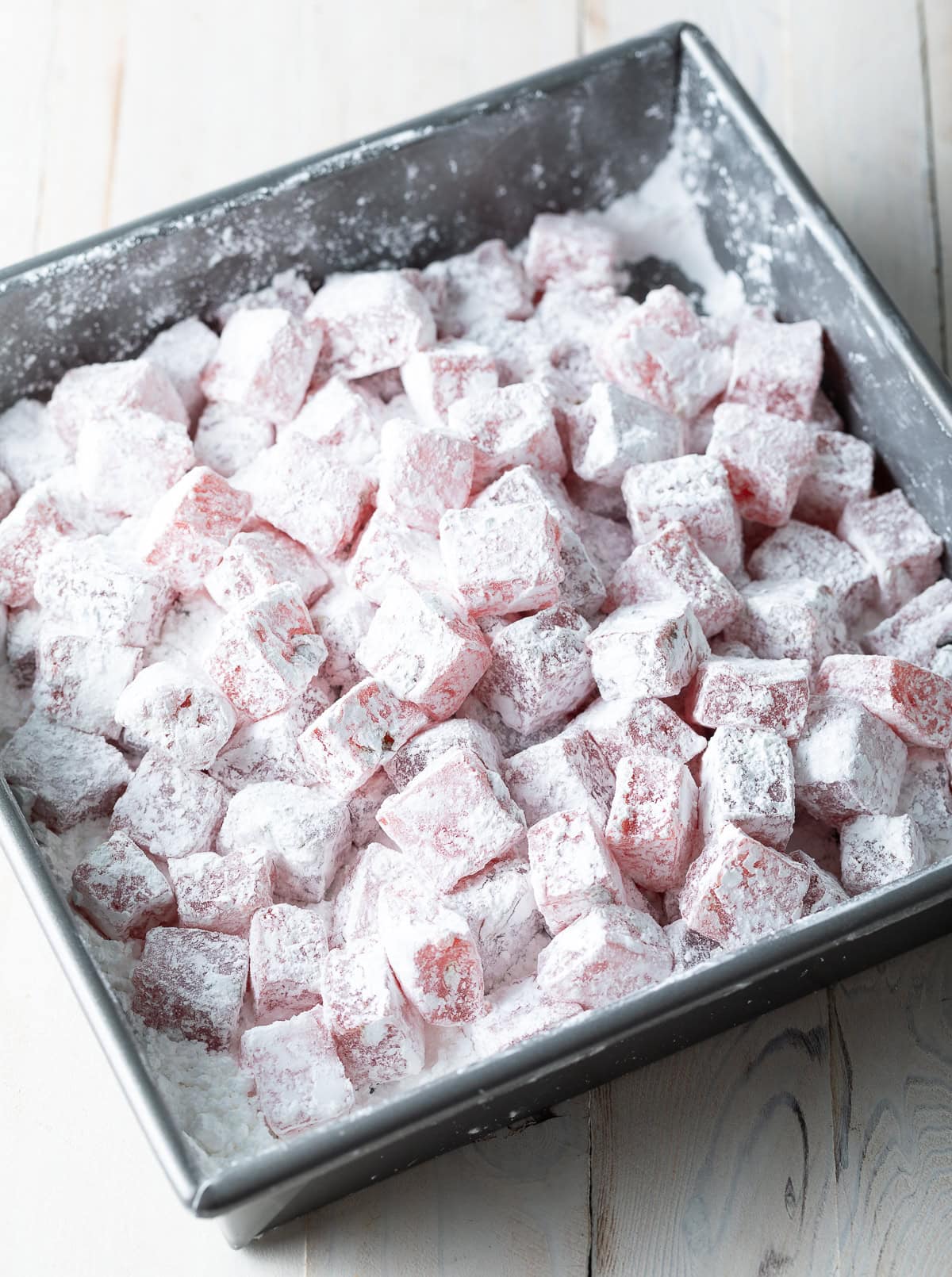
I store homemade Turkish Delight in an airtight container at cool room temperature for up to 2 weeks. I don’t recommend refrigerating it for long-term storage because the humidity in the refrigerator can make the candy wet and sticky. Keep the pieces separated… Turkish Delight loves to stick to itself! I generously coat each piece in powdered sugar and place parchment or wax paper between the layers before storing. If the powdered sugar starts to dissolve or the candy becomes a little sticky, I simply toss the pieces in another light coating of powdered sugar before serving.
I don’t recommend freezing Turkish Delight. Freezing and thawing can introduce moisture and change that signature soft, chewy texture.
Frequently Asked Questions
Nearly any fruit extracts can be incorporated to make your favorite flavor of homemade Lokum. Try lemon, lime, pineapple, or strawberry extracts for more versions with terrific fruitiness. It’s fun to match the food coloring you choose with the color of the fruit! You can also swap the chopped pistachios for almonds, walnuts, hazelnuts, or whatever nuts you prefer.
Rosewater tastes like roses. It is traditional, but it’s potent! I like the amount in this recipe because the raspberry and orange soften the floral flavor. If you’re experimenting with additional rosewater, add it cautiously. There’s a very short distance between pleasantly floral and tasting like perfume.
More Homemade Candy Recipes



Turkish Delight Recipe
Video
Ingredients
- 4 cups granulated sugar
- 4 ¼ cups water divided
- 3 tablespoons lemon juice
- 1 ¼ cups cornstarch
- 1 teaspoon cream of tartar
- 2 tablespoons rosewater (optional)
- 1 ½ teaspoon raspberry extract
- 1 ½ teaspoon orange extract
- ½ teaspoon salt
- ¼ cup chopped pistachios (optional)
- 1 cup powdered sugar
- 4-6 drops red food coloring (optional)
Instructions
- Set two large 4-6 quart stock pots on the stovetop. Attach a candy thermometer onto one pot. Then set out a 9X9 inch baking dish. Line it neatly with foil, then spray it generously with nonstick cooking spray. Set aside.
- Pour 4 cups of sugar and 1 ½ cups of water in the pot with the thermometer. Set on high heat and bring to a boil. Continue to boil until the sugar syrup reaches 240 degrees F.
- Meanwhile, pour the remaining 2 ¾ cups water in the second pot. Whisk in the lemon juice, cornstarch and cream of tartar, making sure there are NO clumps. Turn the heat on high and continue whisking until the mixture forms a thick white paste that resembles petroleum jelly. Again, whisk well to insure there are NO clumps.
- Once the sugar syrup reaches the desired temperature, slowly and carefully pour the hot syrup into the cornstarch paste, a little at a time, making sure there are NO clumps. (This is safest with two sets of hands.)
- Then turn the heat back to medium and simmer for approximately 45 minutes, stirring occasionally, until the mixture looks like thick golden-orange jelly.
- Turn off the heat, stir in the rosewater, raspberry extract, orange extract, and salt. Add food coloring if desired. Then pour half of the mixture into the prepared baking dish.
- Quickly sprinkle with chopped pistachios, then pour the remaining candy mixture over the top before it cools and becomes too thick to pour. (Two sets of hands in nice here as well. If you don’t care that the pistachios are directly in the center of the candy, you can simply mix them into the candy mixture and pour it in the pan all at once.)
- Place the dish in the refrigerator and chill for 30-60 minutes, until firm.
- Turn the Turkish delight out of the dish and peel off the foil. Use a sharp knife (or kitchen shears) to cut the candy into approximately 100 tiny squares.
- Add powdered sugar to the empty baking dish. As you cut the candy pieces, give them a good shake in the powdered sugar to coat them on all sides.
- The candy should be somewhat hard after chilling, but will soften as it sits at room temperature.


Hi. I tried two separate batches today. Neither one would set, even after being in the freezer. Sugar was at 240 before adding to cornstarch mixture. I let it simmer for the full 45 minutes. Any suggestions?
Hi Malinda,
Oh no, I’m sorry! My guess would be that the cornstarch mixture wasn’t cooked long enough to thicken to the consistency of petroleum jelly. What did it look like when you poured in the sugar mixture?
Oh yum! I really enjoyed trying this recipe. I loved the squishy texture.
Never knew that it was so easy to make Turkish delight! I don’t regret trying this at all, they were delicious and it turned out perfect!
this is one of the best holiday desserts that I have ever tried! thank you so much for sharing this amazing recipe!
Oh my gosh YUM!!! Thank you so much for sharing!
Overall a good recipe. Far too sweet for my tastes. Will have to experiment with reducing sugar.
These directions need to be changed because I spent over an hour following these directions exactly and ended up with a ruined batch. I wish it mentioned that the corn starch needs to be mixed with cold water before putting it on the heat. I didn’t know you needed cold water and ended up with a mixture that was impossible to get the clumps out of because i used hot water. Then after only 35 minutes of letting the whole mixture simmer on medium it ended up completely burnt. Either 45 minutes is too long or medium heat is way too high. I’m really disappointed I spent so long making this and still failing even after following the directions carefully.
Hi Kate,
I’m sorry to hear that! Is there a chance the sugar didn’t reach 240 degrees F in step 2? That could be why you had an issue.
Why did I think this dish needed gelatine or even Sure Jel? Cornstarch would be so much easier! :)
Burnt. No idea what I did wrong but I burnt it during step 5, followed as closely to the recipe as possible. Wasted a lot of sugar.
I discovered that you don’t have to boil the cornstarch mixture ahead of time. I just shook the cornstarch and water (actually I used arrowroot/tapioca powder instead of cornstarch) in a jar, then whisked while pouring it into the 240° sugar mixture.
So much easier, and it worked great!
Amazing flavor!
I used lemon extract instead of raspberry, and instead of cornstarch, I used half arrowroot powder and half tapioca flour. I think it worked well, but I haven’t actually made them with cornstarch to compare.
They are on the soft side, but that’s not a problem.
I dusted them with arrowroot powder, as I read of some people having the issue of them turning syrupy with powdered sugar.
It was perfect! I’m going to make it again but without the rose water. So good though!